


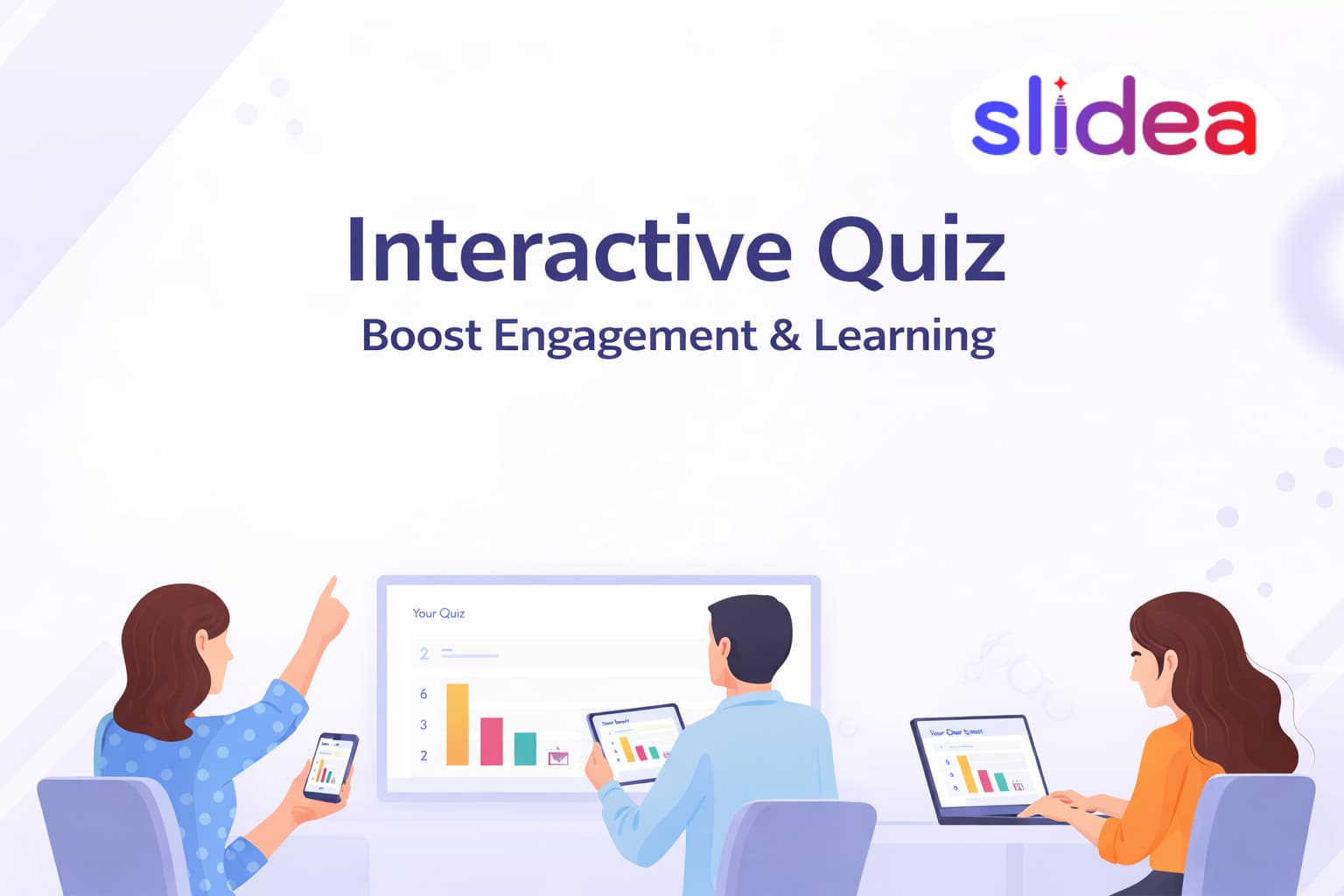
In the digital age, attention is becoming increasingly difficult to capture and even harder to retain. Users are constantly exposed to content, making it easy for them to lose interest within seconds.
This is why traditional content formats such as static presentations, long lectures, or passive videos are no longer enough.
Interactive quizzes provide a powerful solution to this problem.
They transform passive users into active participants by encouraging them to think, respond, and engage in real time. This shift from passive consumption to active interaction significantly improves both engagement and learning outcomes.
What is an Interactive Quiz
An interactive quiz is a dynamic form of content that allows users to actively participate by answering questions in real time or at their own pace.
Unlike traditional quizzes, interactive quizzes often include:
- Real-time responses
- Instant feedback
- Visual results and analytics
- Gamification elements such as scores, timers, and leaderboards
These features make the experience more engaging, competitive, and enjoyable.
Why Interactive Quizzes Are Important
1. Captures Attention Quickly
In a world filled with distractions, capturing attention within the first few seconds is critical.
Interactive quizzes immediately involve users by asking them to take action. This reduces bounce rates and keeps users engaged for longer durations.
2. Encourages Active Participation
Instead of passively consuming information, users actively engage with content.
This leads to:
- Higher interaction rates
- Increased focus
- Better user experience
Active participation creates a stronger connection between the user and the content.
3. Improves Knowledge Retention
Studies show that people remember information better when they actively engage with it.
Interactive quizzes:
- Reinforce learning through repetition
- Help users recall information
- Make learning enjoyable and effective
This is especially useful in education and training environments.
4. Provides Instant Feedback
Interactive quizzes allow users to see results immediately.
This helps:
- Users understand their performance
- Identify areas of improvement
- Stay motivated through instant results
For creators, it provides valuable insights into audience behavior.
5. Enhances User Experience
Interactive content is more enjoyable compared to static content.
Features like animations, timers, and live results make the experience more immersive and engaging.
How Interactive Quizzes Work
Interactive quizzes typically follow a simple process:
Step 1: Question Creation
Create different types of questions such as:
- Multiple choice questions
- True or false
- Fill in the blanks
- Open-ended questions
Step 2: Quiz Distribution
Share the quiz through:
- Live presentations
- Online links
- Websites and applications
Step 3: User Participation
Users answer questions using their devices in real time or asynchronously.
Step 4: Response Collection
Responses are collected instantly and processed.
Step 5: Result Analysis
Results are displayed visually using charts, scores, or rankings.
Types of Interactive Quizzes
1. Live Quizzes
Conducted in real time during events, classrooms, or webinars.
2. Self-Paced Quizzes
Users can take these quizzes anytime at their convenience.
3. Trivia Quizzes
Fun and engaging quizzes focused on general knowledge or entertainment.
4. Assessment Quizzes
Used to evaluate knowledge, skills, or understanding.
5. Personality Quizzes
Provide personalized results based on user responses.
Use Cases of Interactive Quizzes
Education
Interactive quizzes are widely used in schools and colleges to:
- Improve student engagement
- Test understanding
- Make learning interactive
Corporate Training
Organizations use quizzes to:
- Train employees
- Conduct assessments
- Improve knowledge retention
Presentations and Webinars
Speakers use interactive quizzes to:
- Engage audiences
- Break monotony
- Make sessions more interactive
Marketing and Lead Generation
Businesses use quizzes to:
- Attract users
- Generate leads
- Increase conversions
Social Media Engagement
Interactive quizzes are highly shareable and help:
- Increase reach
- Boost engagement
- Create viral content
Key Features of a Good Interactive Quiz
A successful interactive quiz should include:
- Easy-to-understand questions
- Mobile-friendly design
- Real-time response collection
- Instant result display
- Leaderboards and scoring
- Analytics and reporting
- Customization options
Benefits of Using Interactive Quizzes
- Increases engagement rates
- Improves learning outcomes
- Provides real-time insights
- Enhances user experience
- Encourages participation
- Boosts retention and recall
Common Mistakes to Avoid
- Asking too many questions
- Making questions too difficult
- Lack of clear instructions
- Poor user interface
- Not providing feedback
Avoiding these mistakes ensures a better user experience.
Best Practices for Creating Interactive Quizzes
- Keep questions simple and clear
- Use engaging visuals
- Add gamification elements
- Provide instant feedback
- Optimize for mobile devices
- Keep the quiz short and focused
The Growing Demand for Interactive Content
Users today prefer content that is engaging and interactive.
Interactive quizzes are becoming a standard feature in:
- Online learning platforms
- Presentation tools
- Marketing campaigns
This trend is expected to grow rapidly in the coming years.
The Future of Interactive Quizzes
The future of interactive quizzes includes:
- AI-powered personalization
- Advanced analytics
- Integration with live platforms
- Enhanced gamification
These advancements will make quizzes even more powerful and effective.
Conclusion
Interactive quizzes are one of the most effective tools for increasing engagement, improving learning, and delivering better user experiences.
They transform the way users interact with content by making it more dynamic, engaging, and impactful.
Whether used in education, business, or entertainment, interactive quizzes provide significant value.
FAQs
1. What is an interactive quiz?
An interactive quiz is a type of digital content where users actively participate by answering questions and receiving instant feedback. It helps improve engagement, learning, and user interaction compared to traditional static content.
2. How does an interactive quiz improve engagement?
Interactive quizzes require users to think and respond instead of passively consuming content. This increases attention, participation, and time spent on the platform.
3. Where can interactive quizzes be used?
Interactive quizzes can be used in education, corporate training, presentations, webinars, marketing campaigns, and social media engagement.
4. What are the benefits of using an interactive quiz?
Interactive quizzes help increase engagement, improve learning retention, provide real-time feedback, and create a better user experience.
5. What types of questions can be included in an interactive quiz?
You can include multiple choice questions, true or false, fill-in-the-blank, and open-ended questions depending on your use case.
6. Are interactive quizzes effective for learning?
Yes, interactive quizzes are highly effective for learning because they encourage active participation and help users retain information better.
7. Can interactive quizzes be used for marketing?
Yes, businesses use interactive quizzes to generate leads, increase engagement, and improve conversion rates.
8. What features should a good interactive quiz tool have?
A good interactive quiz tool should include real-time responses, instant feedback, analytics, mobile compatibility, and customization options.
9. How long should an interactive quiz be?
An ideal interactive quiz should be short and focused, typically between 5 to 10 questions, to maintain user engagement.
10. What is the future of interactive quizzes?
The future of interactive quizzes includes AI-based personalization, advanced analytics, and deeper integration with learning and presentation platforms.



Leave a Comment
Your email address will not be published. Required fields are marked *