


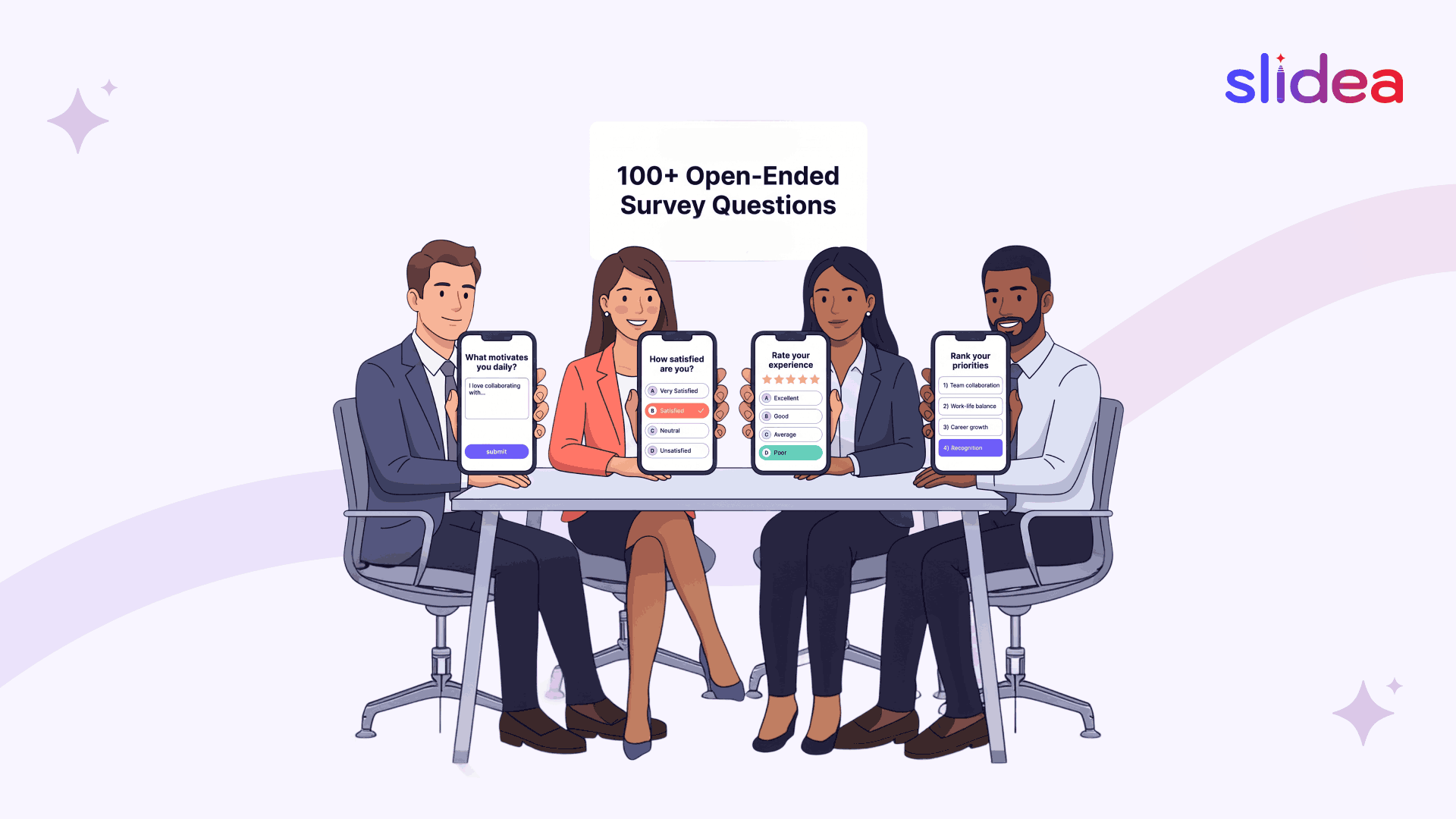
Here is a fact that most survey designers learn the hard way: a survey full of rating scales and yes or no questions tells you what people think. But a survey with the right open-ended questions tells you why they think it. And the "why" is almost always where the most valuable, most honest, and most surprising answers live.
Think about the last survey you filled out. Did you click through the star ratings quickly and move on? Probably. But when there was a box that said "Tell us more about your experience" did you actually stop and write something? Most people do. Because that blank box feels like an invitation. It says "your real opinion matters here."
That is the power of an open-ended survey question. It gives people space to say exactly what they mean, in their own words, without being forced into a box that does not quite fit.
Open-ended survey questions work for customer feedback, employee engagement, event evaluation, academic research, product development, and community listening. They work in written surveys, live polls, virtual meetings, and hybrid events. And when you run them on a smart interactive platform, you get real responses in real time, from every single person in your audience at once.
In this blog, you will find 100+ open-ended survey questions sorted across ten categories, with clear examples and tips on how to use each one.
Why Open-Ended Questions Make Surveys Better
Most surveys are built around closed questions, ratings, rankings, multiple choice, and yes or no. These are fast to answer and easy to analyze. But they only confirm what you already suspected. They never surprise you. They never give you the answer you did not think to look for.
Open-ended survey questions do something completely different. They give respondents the freedom to bring up issues, ideas, feelings, and details that you would never have thought to ask about directly. They reveal the full picture behind the numbers.
For example, if your customer satisfaction rating drops from 4.2 to 3.8, a closed question tells you that something got worse. An open-ended question tells you it was the packaging, or the delivery time, or the tone of your customer service emails. That specific, human answer is what allows you to actually fix things.
Open-ended questions also make respondents feel respected. When a survey question asks "What matters most to you?" instead of making you pick from a pre-made list, it signals that the organization genuinely wants to hear from you, not just tick boxes.
Category 1: Customer Experience and Feedback
These questions help businesses understand what customers truly feel about their products and services.
- What made you decide to try our product or service for the first time?
- How would you describe your overall experience with us to a friend?
- What is the one thing we do really well that you hope we never change?
- What is the biggest frustration you have experienced with our service?
- What made you choose us over other options you were considering?
- How has our product changed or improved something in your daily life?
- What is something you wished you had known before purchasing from us?
- What would make you more likely to recommend us to someone you know?
- How did our customer support team make you feel during your last interaction?
- What is one thing we could add or improve that would make the biggest difference to you?
- How does our product compare to what you were using before?
- What does a perfect experience with our brand look like to you?
Category 2: Employee Engagement and Workplace Feedback
These questions help organizations understand how employees truly feel about their work environment.
- What is the one thing about working here that you would never want to change?
- How would you describe the culture of this workplace to someone thinking about joining?
- What is the biggest challenge you face in your role that the company could help with?
- How supported do you feel by your direct manager and what could improve that?
- What does recognition and appreciation look like to you at work?
- How do you feel about the opportunities for growth and development available to you here?
- What would make you feel more connected to the overall mission of this organization?
- How would you describe the balance between your work responsibilities and personal life right now?
- What is one thing leadership could do differently that would make the biggest positive impact?
- How do you feel about the way decisions are made and communicated in this organization?
- What is something you are proud of achieving in your role over the past year?
- If you could redesign one part of how we work together, what would you change first?
To go deeper into employee insights, explore the employee benefits survey questions for 2025 that help uncover what truly matters to your team.
Category 3: Event and Conference Feedback
Use these questions after any event to understand what worked and what to improve next time.
- What was the highlight of the event for you and why did it stand out?
- How did the event meet or differ from what you were expecting when you signed up?
- What is the one session, speaker, or moment you will remember most from today?
- What topic or theme do you wish had been covered more deeply at this event?
- How did the event format, in-person, virtual, or hybrid, affect your overall experience?
- What would have made networking at this event easier or more valuable for you?
- How did the pacing and structure of the day feel from your perspective?
- What is one thing the organizing team should definitely keep for the next event?
- What is one thing that could be completely different at the next event to make it better?
- How did attending this event change the way you think about the topic or industry?
- What would make you more likely to attend or recommend this event to a colleague?
- How would you describe this event in three words and what do those words say about it?
For more ideas to improve your event feedback strategy, explore the top survey questions for events, and teams to gather deeper and more actionable insights.
Category 4: Product Development and Innovation
These questions help product teams build things people actually want and need.
- What problem were you trying to solve when you first started looking for a product like ours?
- How does our product fit into your daily workflow or routine?
- What feature do you use the most and what makes it so valuable to you?
- What feature do you rarely use and what would make it more relevant to you?
- What is something you cannot currently do with our product that you genuinely wish you could?
- How would you describe our product to someone who had never heard of it?
- What would make you feel confident enough to upgrade to a higher plan or tier?
- How does our product compare to the ideal version you have imagined in your head?
- What is the one thing about our product that took the longest to figure out?
- If you could remove one thing from our product to make it simpler, what would it be?
- What new feature would make you excited enough to tell others about our product?
- How do you think our product could better serve people like you in the future?
Category 5: Education and Learning Experience
These questions help educators and trainers improve the learning experience for students and participants.
- What part of this course or program has been the most valuable to you personally?
- How has what you learned here changed the way you think or work?
- What is one concept or lesson that you found challenging and how could it be taught better?
- How did the pace of the program feel for you and what would you adjust?
- What is something you wish had been included in this course that was not?
- How did the teaching style or format affect your ability to engage with the material?
- What would make you more confident about applying what you learned in real life?
- How did this learning experience compare to others you have had before?
- What is one question this course raised for you that you are still thinking about?
- How supported did you feel throughout the learning process and what could have been better?
- What would you tell someone who was thinking about signing up for this program?
- If you could change one thing about how this course was delivered, what would it be?
Category 6: Community and Social Impact
These questions help organizations understand how their community members feel and what they need.
- How has being part of this community changed something for you?
- What do you think is the greatest strength of this community right now?
- What is the one thing that would make you feel more engaged and involved?
- How would you describe this community to someone who had never heard of it?
- What challenge do you face that you wish this community could help you solve?
- What kind of events or initiatives would you love to see more of from us?
- How has this organization's work made a difference in your life or your neighborhood?
- What is one thing we could do to make this community more welcoming for new members?
- How do you think we could better reach and include people who are not yet part of our community?
- What does meaningful community support look like to you in your day-to-day life?
- What is the most important issue you think this community should be focusing on right now?
- How do you hope this community grows and evolves over the next few years?
Category 7: Brand and Marketing Research
These questions help marketing teams understand how people perceive and connect with a brand.
- How did you first hear about us and what made you decide to find out more?
- What three words would you use to describe our brand and what do they mean to you?
- How does our brand make you feel compared to others in the same space?
- What do you think our brand stands for and does that match what you care about?
- What is one thing about our marketing or messaging that has always stuck with you?
- How do you feel when you see our content on social media or in your inbox?
- What kind of content from us do you find most useful or enjoyable?
- What would make you more likely to engage with or share our content?
- How do you think our brand could better connect with people like you?
- What is one thing our competitors do that you wish we did too?
- How would you describe the tone and personality of our brand in your own words?
- What story or moment made you feel most connected to what we do?
Category 8: Healthcare and Wellness Feedback
These questions help healthcare providers and wellness organizations understand patient and participant experiences.
- How would you describe your overall experience with our healthcare team?
- What is one thing that made you feel most comfortable and cared for during your visit?
- How clearly did you feel the information about your treatment or care was explained to you?
- What is one thing that could have made your experience feel less stressful or overwhelming?
- How supported did you feel in making decisions about your own health and wellbeing?
- What would make you more likely to follow through on the health recommendations you received?
- How did the environment of our facility affect how you felt during your visit?
- What is one thing you wish you had known before your first appointment with us?
- How do you feel about the communication and follow-up you received after your visit?
- What would make you feel more confident about reaching out to us between appointments?
- How has your experience with our team affected the way you think about your health?
- What is the most important thing a healthcare provider can do to make you feel genuinely heard?
Category 9: Technology and App User Feedback
These questions help tech companies and app developers improve the user experience.
- What was the first thing that made you want to try this app or tool?
- How would you describe your experience using this tool to someone who has never tried it?
- What is the one feature you rely on most and what would you lose without it?
- How does this tool compare to others you have used for the same purpose?
- What is the most confusing or frustrating part of using this product right now?
- What would make you feel more confident recommending this tool to a colleague or friend?
- How has this tool changed the way you work, create, or communicate?
- What is one thing you tried to do with this tool that you could not figure out how to do?
- How do you feel about the speed and reliability of this tool in your daily use?
- What would make you excited enough to upgrade or pay more for this tool?
- How do you think this tool could be smarter or more helpful for someone in your role?
- What would the perfect version of this tool look like for you personally?
Category 10: Post-Meeting and Session Feedback
Use these right after a meeting, workshop, or virtual session to capture honest reflections.
- What is the one idea or decision from today's session that you are most excited about?
- How did today's session change or confirm the way you think about this topic?
- What would have made today's meeting more productive or valuable for you?
- How supported did you feel in sharing your thoughts and opinions during today's session?
- What is one thing you will do differently as a result of what was discussed today?
- How would you describe today's session energy and what contributed to it most?
- What is one question that today's session raised for you that you still want to explore?
How Slidea Makes Open-Ended Survey Questions Come Alive
Most surveys live in an email inbox and get ignored. Or they get filled out days later when the memory of the experience has already faded. Slidea changes that completely by bringing your open-ended survey questions into the room, live, in real time, with every person responding at the same moment.
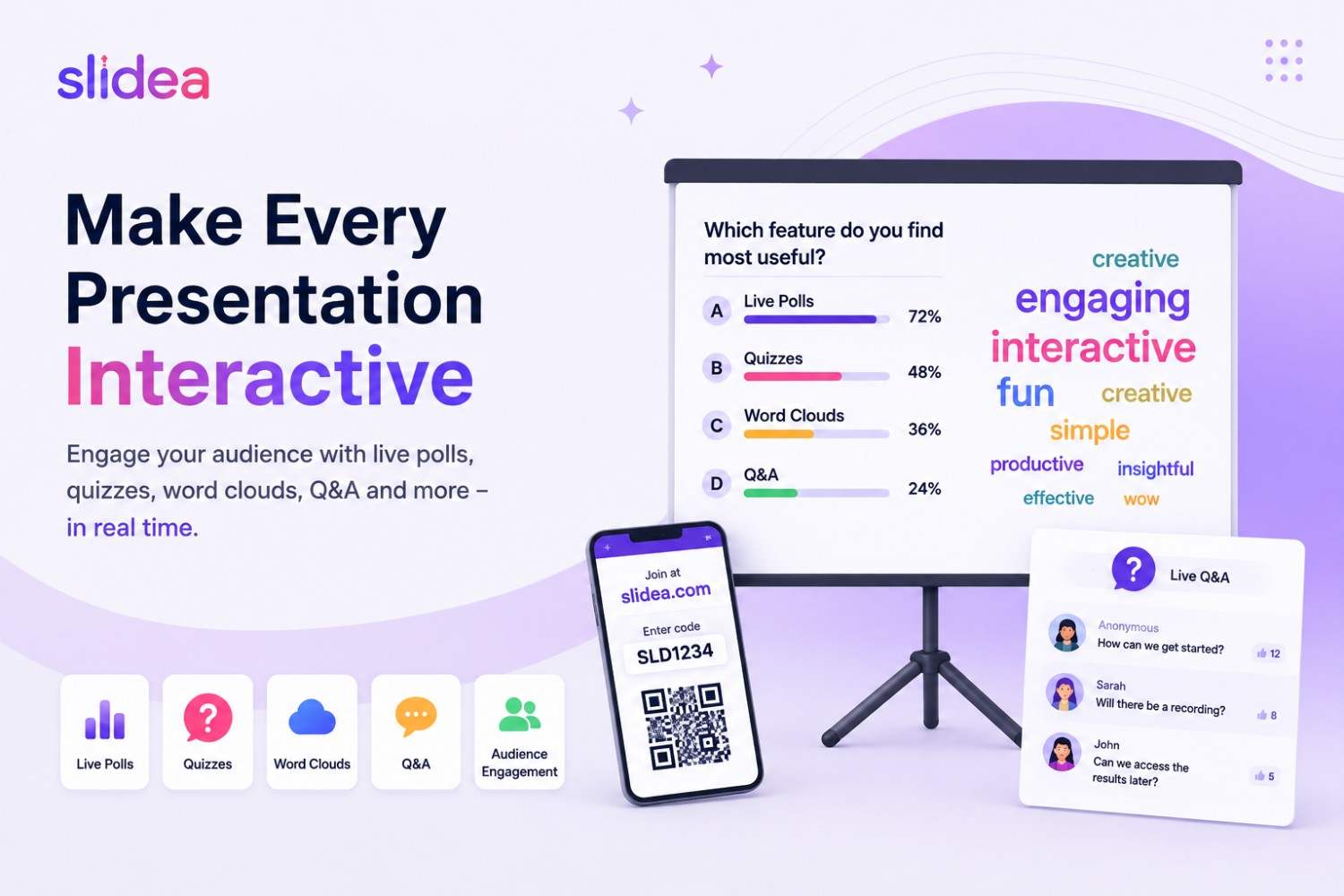
Slidea is an interactive platform that turns any open-ended question into a live, on-screen experience. Here is how each feature makes your surveys more powerful:
Open-Ended Response Slide
Create your survey question on an open ended slide and let your entire audience type their answer from their own phone or laptop. Every response appears live on screen as it comes in, one after another, building into a full, visible picture of how your audience thinks and feels. This is especially powerful at events, workshops, and team sessions where you want immediate, in-the-moment feedback rather than waiting for a follow-up email survey to trickle back days later. The responses are honest, fresh, and incredibly rich because people answer while the experience is still vivid in their minds.
Word Cloud for Quick Pulse Checks
For shorter survey prompts, like "Give one word that describes your experience today" or "Name one word for what you need most right now", word cloud turns the responses into a stunning live visual. The most common words grow the biggest on screen, instantly showing you the dominant feeling, theme, or opinion across your entire audience.
Live Polls for Quantitative Context
Pair your open-ended survey questions with a quick live poll to give the qualitative responses some quantitative context. For example, run a poll asking "How would you rate today's event overall?" and then follow it immediately with an open-ended slide asking "What is the one thing that would have made it even better?" The poll gives you the number. The open-ended question gives you the story behind it. Together, they give you everything you need to actually improve.
Scale Slide for Sentiment Tracking
Use a scale slide to measure how your audience feels before and after a session, product demo, or event. Ask them to rate their confidence, satisfaction, or excitement on a scale, then follow up with an open-ended question asking them to explain their rating. Seeing sentiment shift in real time and understanding exactly why it shifted, is one of the most powerful insights any organization can collect.
Q&A Slide for Follow-Up Depth
After collecting open-ended responses, open up a live Q&A slide where your audience can submit follow-up thoughts, questions, or additional feedback directly from their devices. You can upvote the most important contributions and bring them into a live discussion right there in the session. It turns a one-way feedback exercise into a genuine two-way conversation and that shift in dynamic makes people feel far more invested in the process.
Anonymous Response Mode
Some of the most honest and valuable survey responses come when people feel safe saying exactly what they think without their name attached. Slidea's anonymous response mode encourages that kind of candid, unfiltered feedback, especially for sensitive topics like employee engagement, leadership feedback, or personal wellbeing. When people know their response is anonymous, they say the thing they actually mean. And that is exactly the response that helps organizations make real, meaningful change.
Final Thoughts
A good survey does more than collect answers. It uncovers meaning. Closed questions give you quick data, but open-ended questions give you context, emotion, and real insight. They help you understand not just what people think, but why they think it.
When you use open-ended questions the right way, your surveys stop feeling like forms and start feeling like conversations. People share more. They reflect more. And the quality of feedback improves instantly.
When you combine these questions with an interactive tool like Slidea, the impact becomes even stronger. Responses come in live, ideas build on each other, and feedback becomes something you can see and act on immediately. That is where real improvement begins not after the survey, but during the moment itself.
In the end, better questions lead to better answers. And better answers lead to smarter decisions.
FAQs
Q1. What are open-ended questions in surveys?
Open-ended questions are questions that allow respondents to answer in their own words instead of choosing from fixed options like yes/no or multiple choice.
Q2. Why are open-ended questions important in surveys?
They provide deeper insights by capturing opinions, emotions, and detailed feedback that closed questions cannot reveal.
Q3. When should you use open-ended questions in a survey?
Use them when you want detailed feedback, honest opinions, or ideas for improvement, especially after ratings or multiple-choice questions.
Q4. What is the difference between open-ended and closed-ended survey questions?
Closed-ended questions have fixed answers like yes/no or ratings, while open-ended questions allow free, descriptive responses that encourage deeper thinking.

Your email address will not be published. Required fields are marked *