



In 1933, Franklin D. Roosevelt sat in front of a radio microphone and spoke directly to millions of Americans, not as a president delivering a formal speech, but as a person having a calm, honest conversation. He called them fireside chats. People felt like he was sitting right across from them in their living room.
Nearly a century later, that same idea is still powerful. Fireside chats have become a popular format at conferences, corporate events, leadership summits, classrooms, and even virtual meetings and hybrid events. The setting has changed, but the core idea remains the same: real conversations connect better than polished presentations.
A fireside chat is built on simplicity. Instead of long slides or formal speeches, it focuses on a relaxed discussion between a host and a guest. This makes it easier for audiences to listen, understand, and engage with the topic in a meaningful way.
Today, this format has evolved with technology. Using interactive presentation software, fireside chats are no longer just conversations to watch, they are experiences to join. Features like live polls, word clouds, and Q&A allow the audience to participate in real time, making the session more dynamic and engaging.
If you’ve heard the term and wondered what it means, how it works, and how to run one effectively, this blog will walk you through everything you need to know.
What Is a Fireside Chat?
A fireside chat is an informal, conversational interview or discussion between a moderator and one or more speakers, usually in front of a live audience. It is designed to feel relaxed and personal, like two people having a genuine conversation, rather than a scripted speech or a formal panel debate.
The key ingredients of a fireside chat are simple: one moderator, one or two speakers, a set of thoughtful questions, and an atmosphere that feels open and honest.
Why Are Fireside Chats So Popular?
Fireside chats work because they feel human. People connect more with conversations than with lectures.
Here’s why they are effective:
- Easy to understand: Simple language and natural flow
- More engaging: Feels like listening to a real conversation
- Encourages participation: Audience can ask questions and share thoughts
- Flexible format: Works in classrooms, events, and online sessions
How Is a Fireside Chat Different from a Panel Discussion?
This is one of the most common questions people ask, and the answer is straightforward.
A panel discussion has multiple speakers, usually three to five, who each share their perspective on a topic. The moderator facilitates but the conversation moves between several voices. It can feel more formal and structured.
A fireside chat usually features just one main speaker and one moderator. The focus is narrower and deeper. Because there is only one main voice, the conversation can go further into personal experience, honest opinion, and behind-the-scenes thinking. The audience gets to know the speaker in a way that a panel rarely allows.
For those considering a multi-speaker format, take a look at the popular panel discussion topics for business events to spark more dynamic group conversations.
The Format of a Fireside Chat
A typical fireside chat follows a simple, flexible structure. Here is how most well-run ones are organized:
Opening - Set the Tone
The moderator welcomes the audience, introduces the speaker briefly, and sets the informal tone from the start. A good opening line signals to the audience that this will not be a formal lecture, it will be a real conversation.
Background and Story
The moderator asks the speaker about their journey, background, and how they got to where they are. This part builds the human connection between the speaker and the audience before the deeper topics begin.
Core Topic Deep Dive
This is the main part of the chat. The moderator asks prepared questions around the key theme, leadership, innovation, career lessons, industry insights, or whatever the event calls for. The best fireside chats go beyond surface-level answers here. A good moderator asks follow-up questions and pushes gently for the honest story behind the polished answer.
Audience Q&A
The most important part of a fireside chat, and the one most often underused. Opening the floor to audience questions turns a one-way conversation into a genuine dialogue. This is where the most memorable moments happen.
Closing
The moderator wraps up with a final question, often something personal or forward-looking, and thanks the speaker. A strong closing question gives the chat a memorable ending and leaves the audience with something to think about.
If you want to see how this format works in modern settings, explore interactive fireside chat in meetings and break it down with practical examples.
What Makes a Great Fireside Chat?
The format is simple. But the quality of a fireside chat depends almost entirely on three things:
The questions. A great moderator prepares questions that go beyond what the audience can find on Google. The best questions challenge the speaker gently, invite honest reflection, and take the conversation somewhere unexpected.
The moderator's ability to listen. Prepared questions are a starting point, not a script. The best fireside chat moderators listen carefully to each answer and follow up naturally, like a real conversation, not an interview checklist.
The audience connection. The best fireside chats make the audience feel like they are part of the conversation, not just watching it. That means eye contact with the room, references to the audience's context, and ideally, a real-time way for the audience to ask questions and share their reactions.
Real Examples of Fireside Chats
Fireside chats happen across almost every industry and event type. Here are a few common examples:
Tech Conferences
At events like TechCrunch Disrupt and Web Summit, fireside chats with startup founders and tech leaders are a core part of the program. The informal format allows for candid conversations about failure, funding, and the real story behind well-known companies.
Corporate Town Halls
Many companies use the fireside chat format for executive Q&A sessions. Instead of a CEO delivering a prepared speech, the fireside format lets employees hear genuine answers to honest questions, which builds far more trust.
University Events
Business schools and universities regularly invite successful alumni or industry leaders for a fireside chat with students. The format works well because it feels accessible rather than intimidating.
Leadership Summits
At HR, leadership, and management conferences, fireside chats with CEOs, authors, or coaches are among the most attended sessions because people come for personal insight, not corporate messaging.
Virtual and Hybrid Events
Fireside chats have translated especially well to virtual and hybrid formats because the conversational setup does not lose much in translation to a screen. A well-run virtual fireside chat can feel just as intimate and engaging as an in-person one.
How Slidea Makes Fireside Chats More Engaging
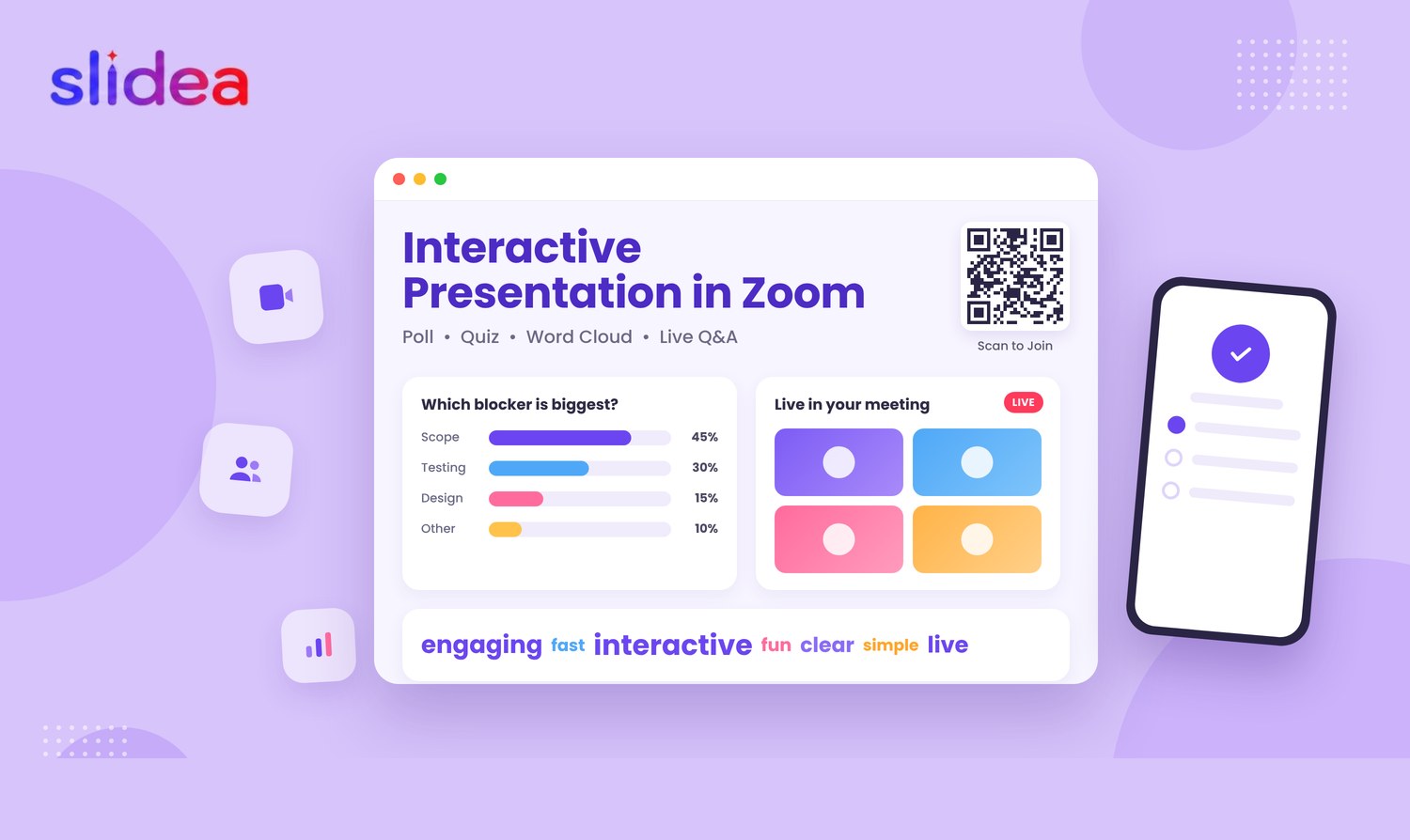
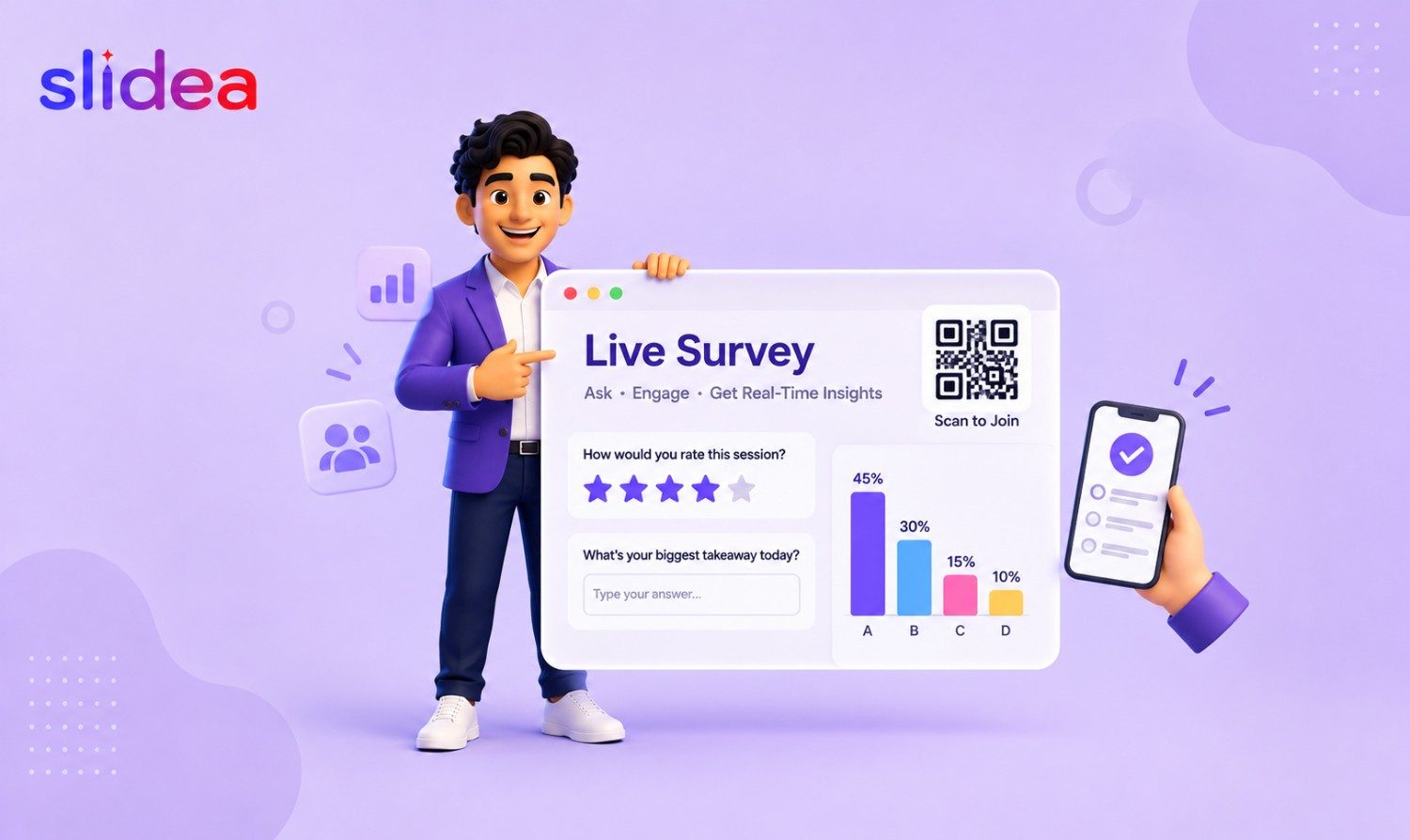
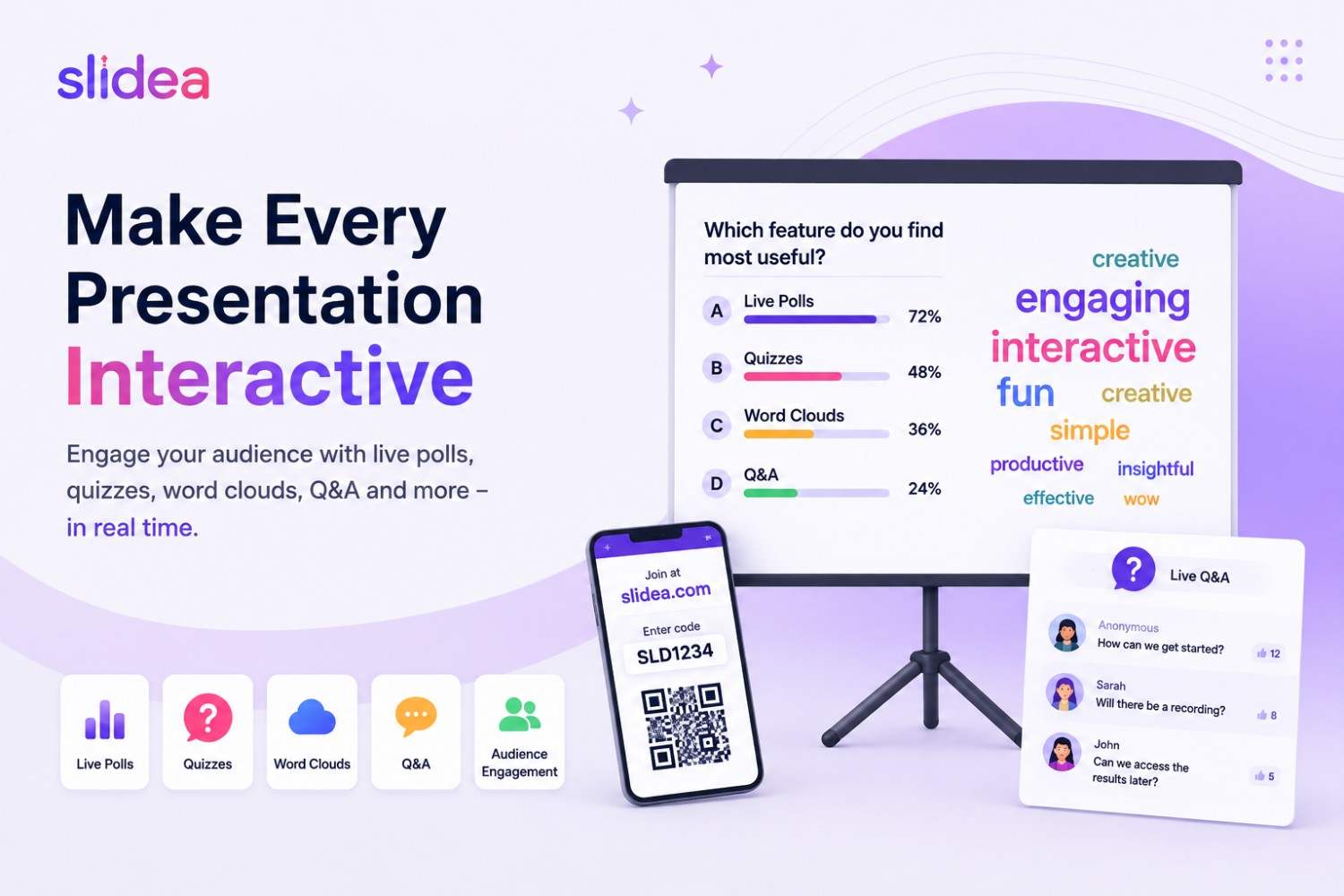
A fireside chat works best when the audience feels involved, not just listening. Instead of slow and limited interaction methods, interactive presentation software like Slidea makes participation simple, fast, and inclusive for everyone in the room and online.
| Slide Type | How It Works | Why It Works |
| Q&A | Audiences submit questions from their phones in real time. Questions can be upvoted and selected by the moderator. | Ensures everyone has a voice, not just a few participants. Keeps the conversation relevant and audience-driven. |
| Live Polls | Ask quick questions before or during the session and display results instantly. | Helps understand audience expectations and knowledge level. Sets the tone for the discussion. |
| Word Cloud | Participants enter one-word responses that appear and grow on screen. | Creates a shared moment and visually captures audience thoughts at the start. |
| Open Ended | The audience types full responses or reactions during the session. | Adds depth to the conversation and gives fresh ideas for the moderator to explore. |
| Scales | Participants rate opinions or understanding on a numeric scale. | Offers a quick pulse check of the audience and creates real-time discussion points. |
| This or That | The audience chooses between two options on screen. | Keeps the session fast-paced and makes transitions between topics smooth and engaging. |
Final Thoughts on Fireside Chats
The best fireside chats feel less like an event and more like a conversation you happened to be lucky enough to witness. That intimacy is the whole point, and it is what makes the format so enduring, from Roosevelt's radio broadcasts to the main stage of a global conference.
But intimacy does not mean passive. The most powerful fireside chats are the ones where the audience feels genuinely included, where their questions shape the conversation, their reactions are visible, and their voices matter as much as the speaker's.
That is interactive presentation software makes it possible. It takes the warmth of a fireside chat and combines it with the energy of a fully engaged room.
A great question starts a conversation. A great tool keeps it alive for everyone in the room.
Fireside Chats FAQs
Q1. What is a fireside chat at a conference?
A fireside chat at a conference is an informal, conversational session between a moderator and a speaker, usually in front of a live audience. It is less formal than a keynote speech and more personal than a panel discussion, designed to feel like a real conversation rather than a prepared presentation.
Q2. What questions should a moderator ask in a fireside chat?
The best fireside chat questions go beyond what the audience already knows about the speaker. Good questions invite personal reflection, honest lessons from failure, behind-the-scenes thinking, and forward-looking opinions. The moderator should also listen carefully and follow up naturally rather than sticking rigidly to a prepared list.
Q3. Can a fireside chat work for virtual and hybrid events?
Yes. The conversational format of a fireside chat translates well to virtual and hybrid settings. Using interactive presentation software like Slidea makes virtual fireside chats even more engaging, remote participants can submit Q&A questions, vote in live polls, and react in real time alongside the in-person audience.
Q4. What is the difference between a fireside chat and a keynote speech?
A keynote speech is a prepared, one-way presentation from a single speaker to an audience. A fireside chat is a two-way conversation between a moderator and a speaker, more informal, more personal, and more open to audience participation. Keynotes inform; fireside chats connect.
Q5. Who should moderate a fireside chat?
A good fireside chat moderator is someone who knows the topic well enough to ask smart follow-up questions but is comfortable enough in front of an audience to keep things feeling relaxed and natural. It does not have to be the most senior person in the room, it should be the best listener.




Your email address will not be published. Required fields are marked *