



Good group discussions don’t just happen. They start with the right question, one that encourages people to share their thoughts, speak openly, and listen to others. If you are leading a team meeting, a workshop, or a classroom session, open-ended questions help create better conversations and deeper ideas.
Many facilitators also use interactive presentation tools to collect live answers, run quick polls, or show responses on screen. This makes it easier for quieter participants to share their opinions and helps everyone see common ideas from the group.
The 50 examples below are organized by purpose, so you can easily choose the right question for the right moment.
Questions to Start a Discussion
You can use these questions at the beginning of a session to help people feel comfortable and ready to talk. They encourage everyone to share their thoughts and join the conversation.
- What is one thing you hope to learn or gain from today’s discussion?
- What has been on your mind the most recently?
- How would you describe the mood of this group in three words?
- Is there something you have been thinking about but haven’t shared yet?
- Where do you see the biggest opportunity right now?
- What would make today’s discussion helpful for you?
- What made you interested in this topic?
- What is one expectation you have for today’s conversation?
- What is one thing you want others in this group to understand about your point of view?
- What would a successful discussion look like to you?
Questions That Help the Group Understand the Topic Better
Once the discussion has started, these questions help the group think more deeply and explore different ideas.
- What assumptions are we making that we have not questioned yet?
- How might someone outside this group see this situation differently?
- What would need to happen for this idea to work successfully?
- Is there something important we are not talking about yet?
- Which part of this problem do we understand the least?
- What information or evidence could change your opinion on this?
- If you had to support the opposite opinion, what argument would you give?
- What difficult truth might be hidden in this discussion?
- Are we making something complex seem too simple?
- If someone new looked at this issue, what do you think they might notice that we missed?
Questions to Build Group Connection
These questions are helpful when a new team starts working together, after a difficult period, or when the group wants to rebuild trust.
- What is a recent success, big or small, that you feel proud of?
- What is something a teammate did recently that helped you in your work?
- What is one thing you wish others understood about your job or role?
- When do you feel most excited or motivated at work?
- What type of support would help you do your work better right now?
- What is something useful you learned from someone in this group?
- What does a really good workday look like for you?
- What is one opinion or idea you changed your mind about in the past year?
- What challenge did you face that helped you learn something valuable?
- What do you think this team does better than many other teams?
Questions for Creative and Strategic Thinking
Use these questions when the group needs to think creatively, explore new ideas, or look at problems differently.
- If we started this project again from the beginning, what would we do differently?
- What is a bold idea we have not tried yet?
- What would a big improvement in this situation look like?
- If money or resources were not a problem, what would we do first?
- What is one issue we keep delaying but should address soon?
- What would we try if we knew there was no chance of failure?
- What small change could create a big positive result?
- In which areas are we being too careful or playing too safe?
- What could the best version of this project look like in five years?
- Is there an unusual idea you have that you have not shared yet? Why?
Questions to Close and Reflect
Ending a discussion well is just as important as starting it well. These questions help the group summarize ideas, reflect on the conversation, and leave with clear thoughts.
- What is the most important thing you learned from today’s discussion?
- What new question are you thinking about now that you did not have before?
- What is one action you plan to take before our next meeting?
- What part of this conversation do you want to think about more later?
- How do you feel about the direction the group decided on today?
- What is one important point we should remember from this discussion?
- What topic should we talk about in more detail next time?
- Did your opinion or thinking change in any way today? How?
- What is something someone said today that surprised you?
- If you had to give today’s discussion a title, what would it be?
How to Use These Questions Effectively
Choosing a good question is important, but how you use it also matters. These simple tips can help make your discussions more meaningful.
Ask one question at a time
Focus on a single question instead of many. One thoughtful question can lead to a deep conversation that lasts a long time.
Give people time to think
After asking the question, pause for a few seconds. This quiet moment helps participants think clearly before they respond.
Let different people start the conversation
Try changing who speaks first each time. When different people begin the discussion, you often get more varied ideas and viewpoints.
Choose the right question for the situation
Think about how the group feels. If people seem distant, start with a question that helps them connect before moving to bigger or strategic topics.
How to Use Slidea for Group Discussion Questions
Asking a good question is the first step. The real challenge is getting everyone in the group to respond. This is where Slidea can help.
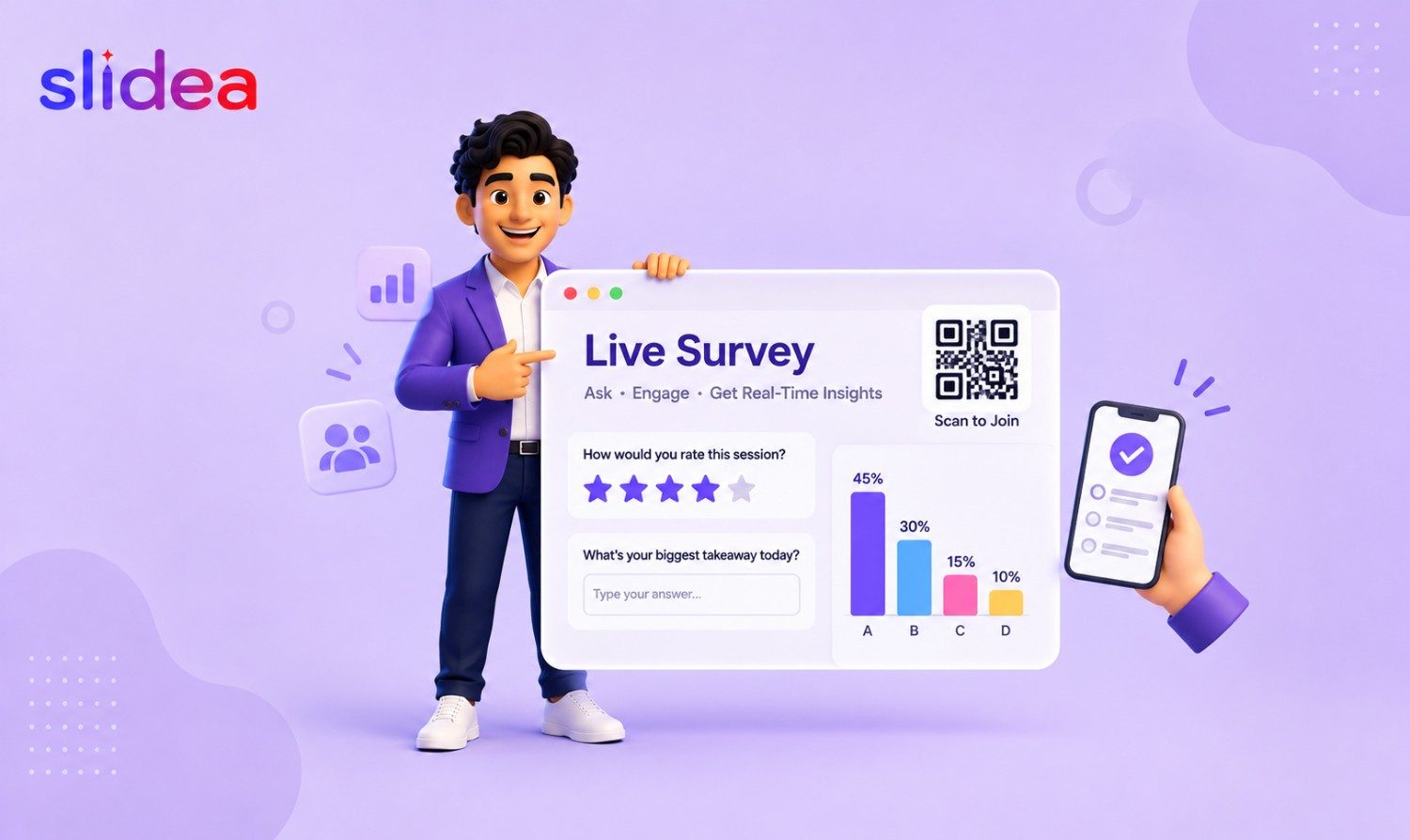
Slidea is a presentation tool that allows participants to share their answers in real time using their phone or laptop. They do not need to download an app. Instead of only a few people speaking while others stay quiet, everyone in the room can take part at the same time.
Here is how it works during a live group discussion:
Show the question on the screen
Add your open-ended question to a slide. Participants can see the question on the main screen and on their own devices.
Collect answers instantly
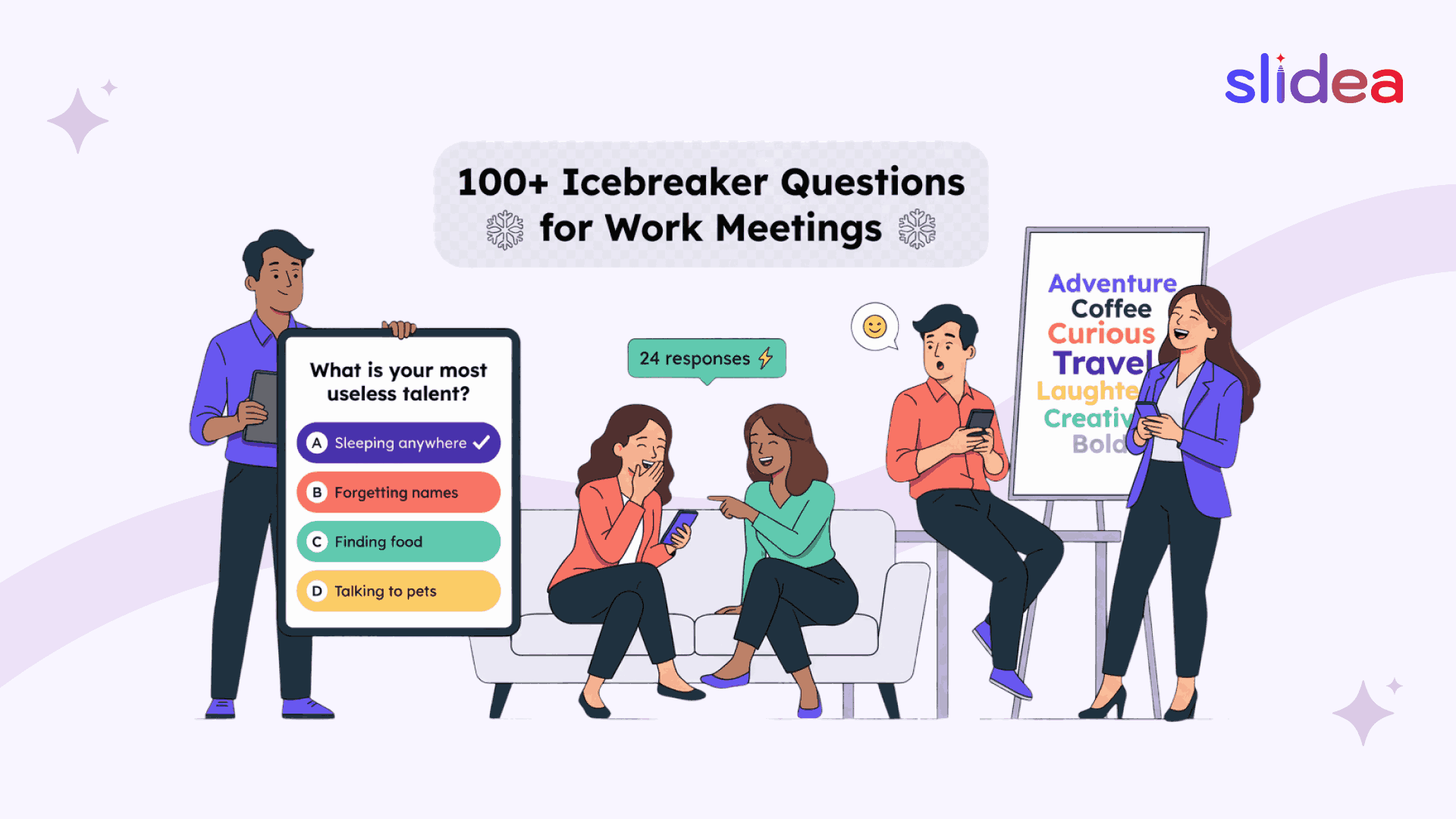
You can gather responses in different ways, such as a word cloud, open text responses, rating scales, or multiple-choice polls. For example, a question like “What is one thing you wish others understood about your role?” works well with a word cloud or text responses because every answer appears on the screen as people submit it.
Use the responses to guide the discussion
After the answers appear, use them to continue the conversation. Instead of the facilitator choosing the direction, the group’s responses help shape what the discussion focuses on. This makes the conversation feel more collaborative.
Use it for reflection at the end
Questions such as “What is your biggest takeaway from today?” work well at the end of a session. Everyone submits their response, the answers appear on screen, and the group finishes with a clear summary created from their own ideas.
If you are running a team meeting, a training workshop, or a large conference, Slidea helps you ask questions and hear from everyone in the room quickly and easily.
Final Thoughts
Good group discussions do not need a perfect plan or complicated setup. Most of the time, they simply begin with one thoughtful question asked at the right time.
The 50 open-ended questions in this guide are meant to help you get started, not to follow step by step. Skilled facilitators usually choose one question that fits the situation, allow people to share their ideas, and let the conversation grow naturally.
What makes open-ended questions powerful is the message they give to the group. They show that everyone’s opinion is welcome, there is no single correct answer, and people can speak freely. When participants feel comfortable sharing their thoughts, discussions become more meaningful and productive.
If you are new to using these questions, start simple. Choose one question before your next meeting and see how people respond. Over time, you can add more questions and improve the way your discussions flow.
If you also want every participant to share their ideas, tools like Slidea can help. You can display the question on the screen, collect answers live, and show the responses to the whole group. This allows everyone to take part, not just the people who usually speak first.
Start with a question, invite people to share, and watch the conversation grow.
FAQs
1. How many questions should I use in one session?
Using one to three questions is usually enough. The goal is to create a meaningful discussion, not to ask too many questions. Allow enough time for people to talk about each question before moving to the next.
2. What should I do if the group becomes quiet after I ask a question?
Silence often means people are thinking. Wait for a few seconds so participants can prepare their thoughts. If no one responds after a short pause, gently invite someone to share their opinion first.
3. Do these questions work in online meetings?
Yes, they work well in virtual meetings. You can ask participants to write a short answer in the chat before speaking. This gives everyone time to think and helps more people take part in the conversation.
4. Can I use these questions in formal events like workshops or leadership meetings?
Yes. These questions can be used in professional environments. Choose questions that encourage deeper thinking or strategy and adjust the wording to suit a formal setting.
5. How can I keep the discussion from going off topic?
Clearly explain the main topic before asking the question. If the discussion moves away from it, acknowledge the idea and suggest discussing it later so the group can stay focused.





Leave a Comment
Your email address will not be published. Required fields are marked *