



Every meeting begins the same way. Cameras turn on. People shuffle papers. Someone asks quietly, “Can everyone hear me?” And then nothing. Everyone waits for the agenda to begin.
The problem is not the agenda. It is the silence before it. When people do not get a chance to say something simple and natural, they are less likely to speak up when it really matters. That is where a good icebreaker helps, not as filler, but as a smart way to get people comfortable before the real discussion starts.
When you pair these questions with interactive presentation software, it becomes even easier for everyone to take part and share their thoughts in real time.
Below, you will find questions grouped by situation, tone, and purpose. If you are running a 10-person standup or a 200-person virtual summit, there is a question here that will work.
“When people share something small, they become more willing to share something significant.”
Why Icebreakers Are a Productivity Tool, Not a Time Waster
Many people think icebreakers are the awkward activities HR asks people to do before a team event. But when they are used with purpose, they actually have a real benefit.
When someone speaks early in a meeting, even about something small, they feel more comfortable sharing ideas later. It helps remove the fear of speaking in front of others. Icebreakers also help team members see each other as people, not just names on a list.
In hybrid or remote work, where people do not have casual hallway chats, these small moments of connection are even more important.
Even a simple two-minute icebreaker can change the energy of a 60-minute meeting and make people more engaged.
01 — Quick Starters (Under 3 Minutes)
These questions are perfect when you have very little time but still want everyone to relax and start talking. Ask one question and let everyone answer once. That is enough to warm up the group.
- What is one thing that made you happy this week?
- If you could work from any place in the world right now, where would you go?
- What is the best food you ate in the last week?
- What is one skill you would like to learn in the future?
- What are you watching, reading, or listening to these days?
- What is your favorite way to start the morning before work?
- What small thing usually makes your day better?
- What hobby have you been spending the most time on recently?
02 — Professional Questions (For Formal Meetings)
Formal meetings like board meetings, client calls, and leadership discussions can also benefit from a short warm-up. The questions below keep the conversation professional while helping people share their thoughts.
- What professional skill are you trying to improve this year?
- Which project or task are you most excited about right now?
- What is the best career advice you have received, and do you still follow it?
- What work habit helps you stay organized or focused?
- What motivates you during a busy or challenging week at work?
- What is one thing your team does really well but people do not always notice?
03 — Team Bonding Questions (Build Strong Connections)
These questions help people share small stories and get to know each other better. When team members open up, they start to see each other as real people, not just job roles. These are great for team meetings, workshops, or any session focused on building relationships.
- What is the most surprising place you have ever visited?
- If you could quickly learn any skill, what would you choose?
- If you could have dinner with anyone, past or present, who would it be?
- If you had to live in another city for a year, where would you go?
- What is one thing on your bucket list that you really want to do?
- What is a small, funny thing that always makes you laugh?
- How do you like to celebrate, at work or in your personal life?
- What do you usually do on weekends to relax and feel refreshed?
04 — Remote & Virtual Questions (Bring People Closer)
Remote teams can sometimes feel less connected than in-person teams, especially in remote and hybrid meetings. These questions help people share their daily work habits and make online meetings feel more personal.
- What is one thing on your desk that you use every day?
- How do you usually take a good break during your workday?
- What kind of music, podcast, or quiet helps you focus better?
- What is one thing you would miss about remote work if you had to go to the office full-time?
- If you could improve one thing about how your team communicates online, what would it be?
- What is one tool or app that has made your remote work easier?
05 — Creative Fun Questions (For Teams That Like to Laugh)
Sometimes a fun and unexpected question can make everyone smile. These questions encourage creativity and help the team relax and enjoy the moment.
- If your workday had a background song, what would it be?
- What superpower would make your job much easier?
- If you could switch roles with someone on your team for a week, who would it be?
- What small invention would make your daily life easier?
- If your team had a mascot, what would it be?
- If a movie or documentary were made about your team, what would you call it?
06 — 5 Tips for Using These Questions Effectively
Use one question per meeting
Do not ask too many questions. Choose one, let everyone share briefly, and then continue with the meeting. Around 2–4 minutes is enough.
Choose the right type of question
Pick a question that fits the situation. For serious meetings, use professional questions. For casual team catch-ups, you can choose fun ones.
Do not force anyone to answer
Make it clear that people can skip if they want. When participation feels optional, people feel more comfortable sharing.
Change your questions often
Using the same question every time can feel boring. Keep a few different questions and rotate them to keep things interesting.
Make it easy for everyone to take part
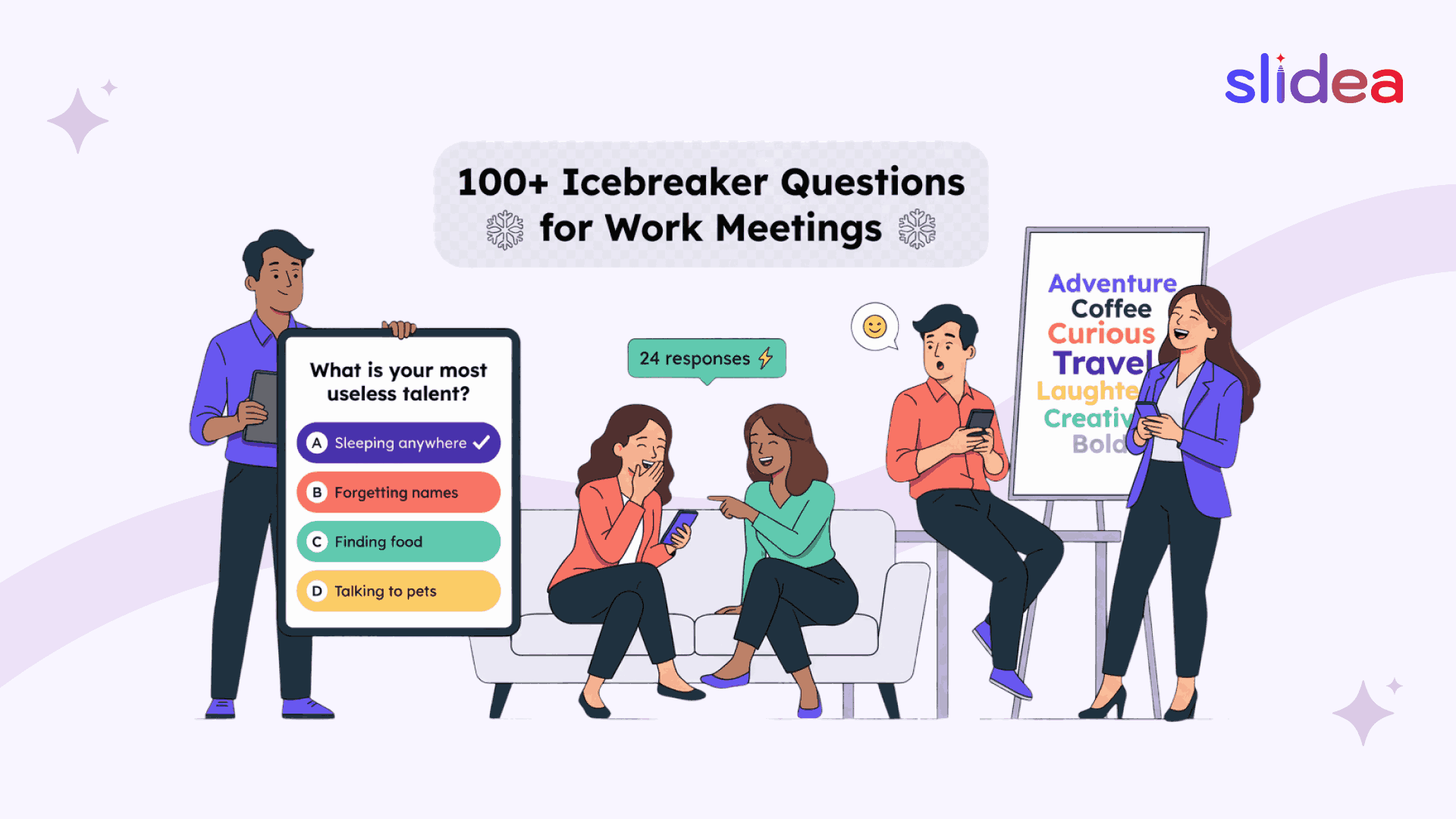
Instead of asking people one by one, you can use Slidea. Participants can answer using their phone or laptop, and responses can appear as a word cloud, poll, or list on the screen. This helps everyone join in, even those who prefer not to speak.
Final Thoughts
Meetings do not have to start with silence. The way a meeting begins can change everything. A simple start can turn a quiet group into an active and engaged team.
Icebreaker questions are not just for fun. They help people feel comfortable and ready to speak. When someone answers an easy question at the beginning, they are more likely to share ideas later in the meeting.
You do not need a long plan or a special activity. One simple question, asked at the right time, is enough to change the mood of the meeting.
Start with one question from this list and see how people respond. Try a different one in your next meeting. Over time, this small habit helps build a team where people feel confident speaking, sharing ideas, and taking part.
If you want to make it even easier for everyone to join, tools like Slidea can help. You can turn a simple question into a live activity where everyone can answer quickly from their device.
Even the quietest group has great ideas. They just need the right question to get started. 😊
FAQs
1. What is an icebreaker question?
It is a simple question asked at the start of a meeting. It helps people relax, speak easily, and feel comfortable sharing their ideas.
2. How long should an icebreaker take?
Around 2 to 5 minutes is enough. Ask one question and let everyone give a short answer. Keep it quick so you can move to the main discussion.
3. Do icebreakers really help meetings?
Yes, they do. When people speak at the beginning, they feel more confident to talk later. It makes the meeting more active and engaging.
4. What are good icebreaker questions for virtual meetings?
Questions related to remote work work best. For example, asking about home office setup, daily routine, or favorite tools. These are easy to answer and start conversations.
5. How many icebreaker questions should I use in one meeting?
Only one question is enough. The goal is to get people talking, not to ask too many questions.





Leave a Comment
Your email address will not be published. Required fields are marked *