



Every teacher has faced this moment, a student who scores perfectly on every test but cannot explain the concept in their own words. And another student who struggles with exams but lights up when given a different way to show what they know.
That gap between a grade and genuine understanding is one of the oldest problems in education. And it is the reason why assessment, done thoughtfully, is one of the most powerful things a teacher can do for their students.
Assessment in education is not just about measuring what students know at the end of a unit. It is about understanding where they are at every stage of the learning journey, catching gaps before they grow, and giving every student the right kind of feedback at the right time. But most classrooms still rely on the same two or three assessment methods, usually a quiz, a test, and a final exam. That narrow approach misses a lot.
Schools today have access to interactive learning tools that make assessment faster, more accurate, and far more engaging for students. Student engagement during assessment is no longer a bonus, it is a core part of how effective assessment actually works. When students are actively involved in the process rather than passively sitting through it, the data teachers collect becomes more honest and more useful.
This shift is also happening beyond the traditional classroom. With virtual and hybrid learning now a permanent part of education, teachers need assessment methods that work just as well on a screen as they do in a physical room. The six types of assessment in this blog are built for exactly that, and can be brought to life using interactive tools that work for every kind of learning environment.
What Is Assessment in Education?
Assessment in education is the process of gathering information about what students know, understand, and can do. It helps teachers make decisions about what to teach, how to teach it, and how to support individual students.
Assessment is not just about testing. It is about understanding. A well-designed assessment tells a student where they are strong, where they need help, and what their next step should be. For teachers, it is feedback that shapes every lesson that follows.
Why the Type of Assessment Matters
Using the wrong type of assessment at the wrong time gives incomplete or misleading information. A high-stakes final exam at the end of a unit tells the teacher how students performed, but not why some struggled or what could have been done earlier to help them.
Using a mix of assessment types throughout the learning journey gives a much fuller and more accurate picture of student progress. That is why every good teacher needs to understand all six types, not just the ones they use most often.
1. Formative Assessment
Formative assessment happens during the learning process, not at the end of it. Its purpose is to give both the teacher and the student ongoing feedback so adjustments can be made while there is still time to act on them.
It is low stakes and frequent. It is not meant to produce a final grade, it is meant to guide the next step in learning.
Examples of formative assessment:
- Exit tickets at the end of a lesson asking students what they learned and what confused them
- Thumbs up or thumbs down responses to a question
- Short quizzes after each topic, or during a lesson to check understanding
- Word clouds where students type one thing they understood and one thing they did not
Why it works: Formative assessment catches misunderstandings early, before they become bigger gaps. It gives students a chance to self-correct and gives teachers the real-time data they need to adjust their teaching on the spot.
To explore more practical ideas, check out the formative assessment examples that boost student learning offer simple and effective strategies.
2. Summative Assessment
Summative assessment happens at the end of a learning period, after a unit, term, or school year. It measures how much a student has learned against a set standard or learning goal.
Unlike formative assessment, summative assessment is high stakes and produces a final grade or score.
Examples of summative assessment:
- End-of-unit exams
- Final semester tests
- Standardized national or state exams
- End-of-year projects
- Final essays or research papers
Why it works: Summative assessment gives a clear benchmark of achievement. It shows whether learning goals were met and provides data that schools and education systems use to track progress over time.
The key difference from formative: Summative assessment evaluates learning after it has happened. Formative assessment improves learning while it is happening.
3. Diagnostic Assessment
Diagnostic assessment happens before teaching begins. It helps the teacher understand what students already know, and what misconceptions they are bringing into the classroom before a new topic starts.
Think of it like a health check-up before starting a fitness program. You need to know the starting point before you can plan the route.
Examples of diagnostic assessment:
- Pre-lesson quizzes asking what students already know about a topic
- KWL charts (Know, Want to know, Learned)
- Open-ended questions at the start of a new unit
- Concept mapping exercises
- Live polls asking students to rate their confidence on a new topic before teaching starts
Why it works: Diagnostic assessment prevents teachers from spending time on things students already know, or rushing past things students do not understand at all. It makes teaching more targeted and more efficient from lesson one.
4. Ipsative Assessment
Ipsative assessment compares a student's current performance to their own past performance, not to the performance of other students or to an external standard.
This type of assessment asks: "How much has this student improved compared to where they started?"
Examples of ipsative assessment:
- Portfolio assessments where students collect work samples over time and reflect on their growth
- Self-reflection journals comparing early and recent work
- Progress tracking tools that show individual improvement over weeks or months
- Personal goal-setting followed by a review of whether goals were met
Why it works: Ipsative assessment is especially powerful for students who feel they can never measure up to their peers. It shifts the focus from comparison to personal growth, which builds confidence, motivation, and a genuine love of learning.
5. Peer Assessment
Peer assessment involves students evaluating each other's work using a set of criteria. Instead of the teacher being the only source of feedback, students learn to give and receive constructive feedback from their classmates.
Examples of peer assessment:
- Structured peer review of essays or projects using a rubric
- Peer grading of presentations using a checklist
- Small group feedback sessions where students critique each other's work
- Anonymous class voting on the best solution to a problem
- Live students response activities where they rate each other's ideas in real time
Why it works: Peer assessment develops critical thinking and communication skills. Students often engage more deeply with work when they know a classmate, not just the teacher, will be evaluating it. It also frees up teacher time and gives students a wider range of perspectives on their work.
6. Self-Assessment
Self-assessment asks students to evaluate their own learning, performance, and understanding. It builds the ability to think about your own thinking, which is one of the strongest predictors of long-term academic success.
Examples of self-assessment:
- Students rating their own confidence on a topic before and after a lesson
- Reflection prompts asking "What did I do well?" and "What would I do differently?"
- Traffic light self-ratings, green for confident, yellow for unsure, red for confused
- Goal-setting followed by self-review at the end of a unit
- Students annotating their own work to explain their decisions and choices
Why it works: Self-assessment gives students ownership of their learning. It teaches them to be honest about what they know and what they do not, a skill that is just as important in real life as it is in the classroom.
How Slidea Makes Assessment More Interactive
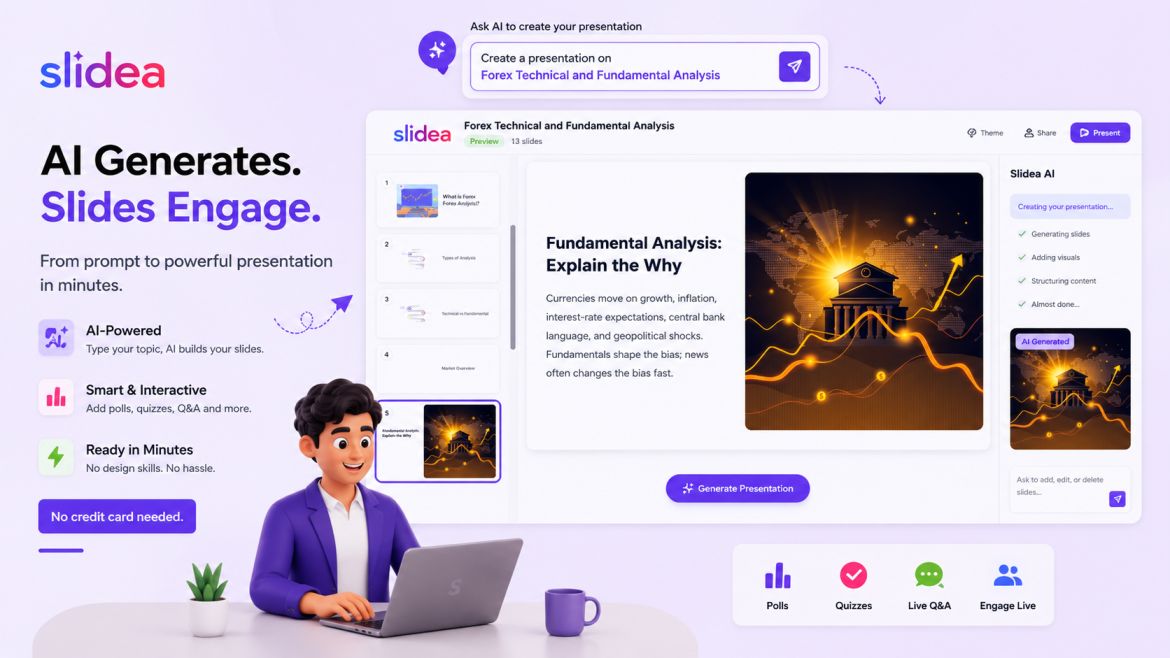
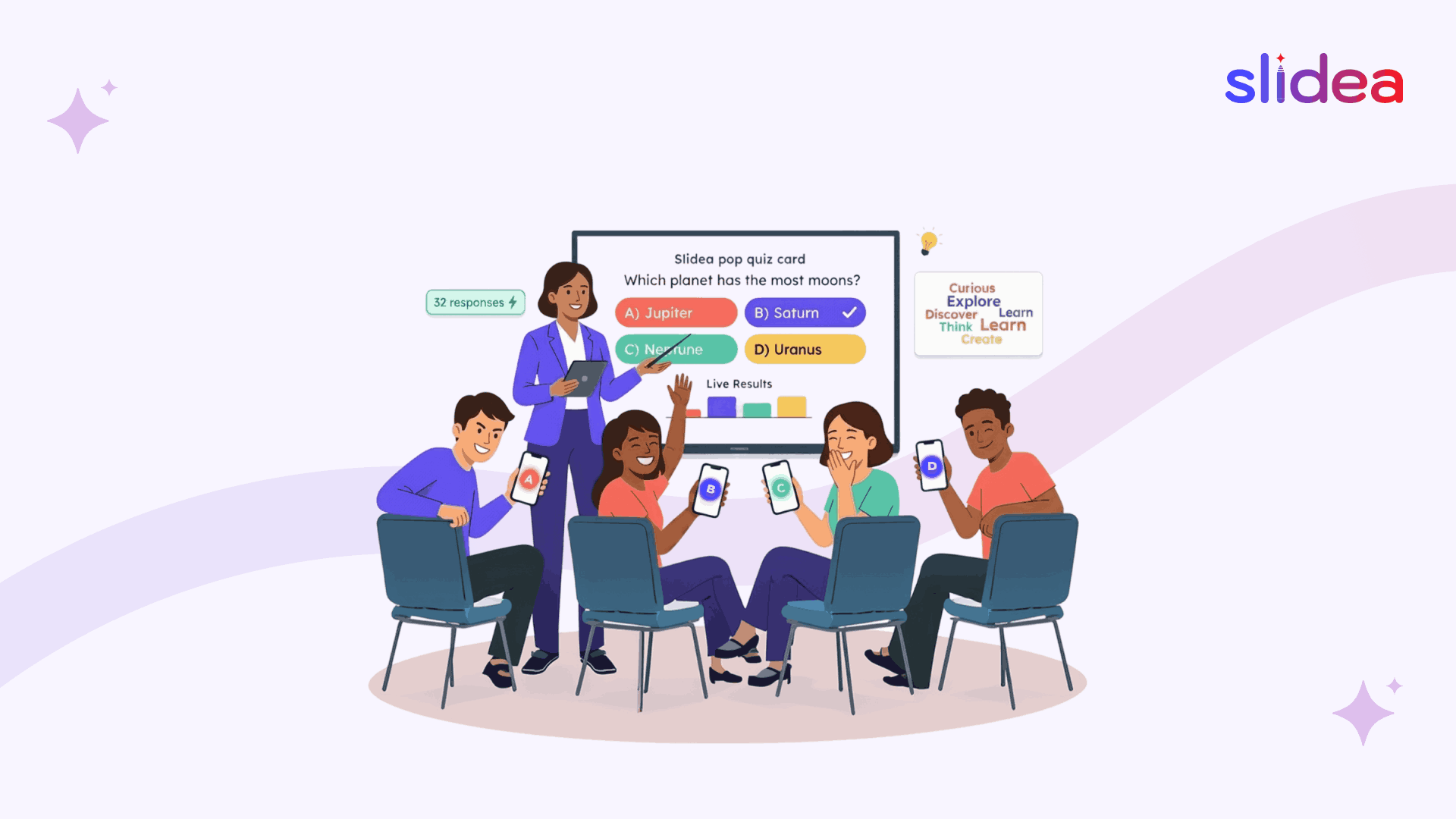
Using interactive presentation software like Slidea, teachers can turn traditional assessments into engaging, real-time learning experiences. Instead of relying only on tests, different slide types help collect responses, measure understanding, and improve audience engagement across classrooms, virtual meetings, and hybrid events.
Here’s how each slide type works in practice:
| Slide Type | How It Works | Why It Works |
| Quiz (Select answer, Type answer, Pick the Number, Lineup) | Students answer questions in different formats like multiple-choice, typing answers, choosing numbers, or arranging items in order | Covers all levels of learning, from quick checks to deep understanding, while keeping students actively involved |
| Live Polls | Ask a question with options and show results instantly as students vote | Great for quick feedback, opinions, and checking understanding in real time |
| Word Cloud | Students submit one or two words that appear and grow based on popularity | Visually highlights key ideas and helps spot common responses quickly |
| Open Ended | Students type full answers that appear on screen | Encourages deeper thinking and detailed responses instead of simple selection |
| Q&A | Students ask questions or respond to prompts during the session | Creates a safe space for interaction and clears doubts instantly |
| Traffic Lights | Students choose green, yellow, or red to show their level of understanding | Simple and fast way to check if students are following along |
| This or That | Students pick between two options on screen | Keeps participation easy and fun while gathering quick opinions |
Final Thoughts
Assessment is not just about testing students. It is about helping them learn better. When different types of assessment are used, students get more opportunities to show what they know.
Using interactive presentation software makes this process even more powerful. It turns assessments into engaging experiences where students participate, think actively, and receive instant feedback.
When learning becomes interactive, students stay interested, understand concepts better, and feel more confident in their abilities.
FAQs
Q1. What is the difference between formative and summative assessment?
Formative assessment happens during learning and is used to improve it. Summative assessment happens at the end of a learning period and measures the final result. Formative is the ongoing feedback; summative is the final judgment.
Q2. Why is diagnostic assessment important before teaching a new topic?
Diagnostic assessment tells the teacher what students already know before a new unit begins. It prevents wasted time teaching things students already understand and helps the teacher identify misconceptions that need to be corrected from the start.
Q3. How can teachers use self-assessment effectively in the classroom?
Self-assessment works best when students have a clear framework, like traffic light ratings, confidence scales, or structured reflection prompts. Tools like Slidea make self-assessment quick and honest by letting students respond anonymously from their own devices.
Q4. Can Slidea be used for formal assessments like end-of-unit quizzes?
Yes. Slidea's quiz slide types, select answer, type answer, pick the number, and lineup, support fully scored, real-time quizzes that work for formal summative assessments. Scores are calculated automatically and teachers get a full breakdown of class and individual performance after every session.
Q5. How does interactive learning software improve student engagement during assessments?
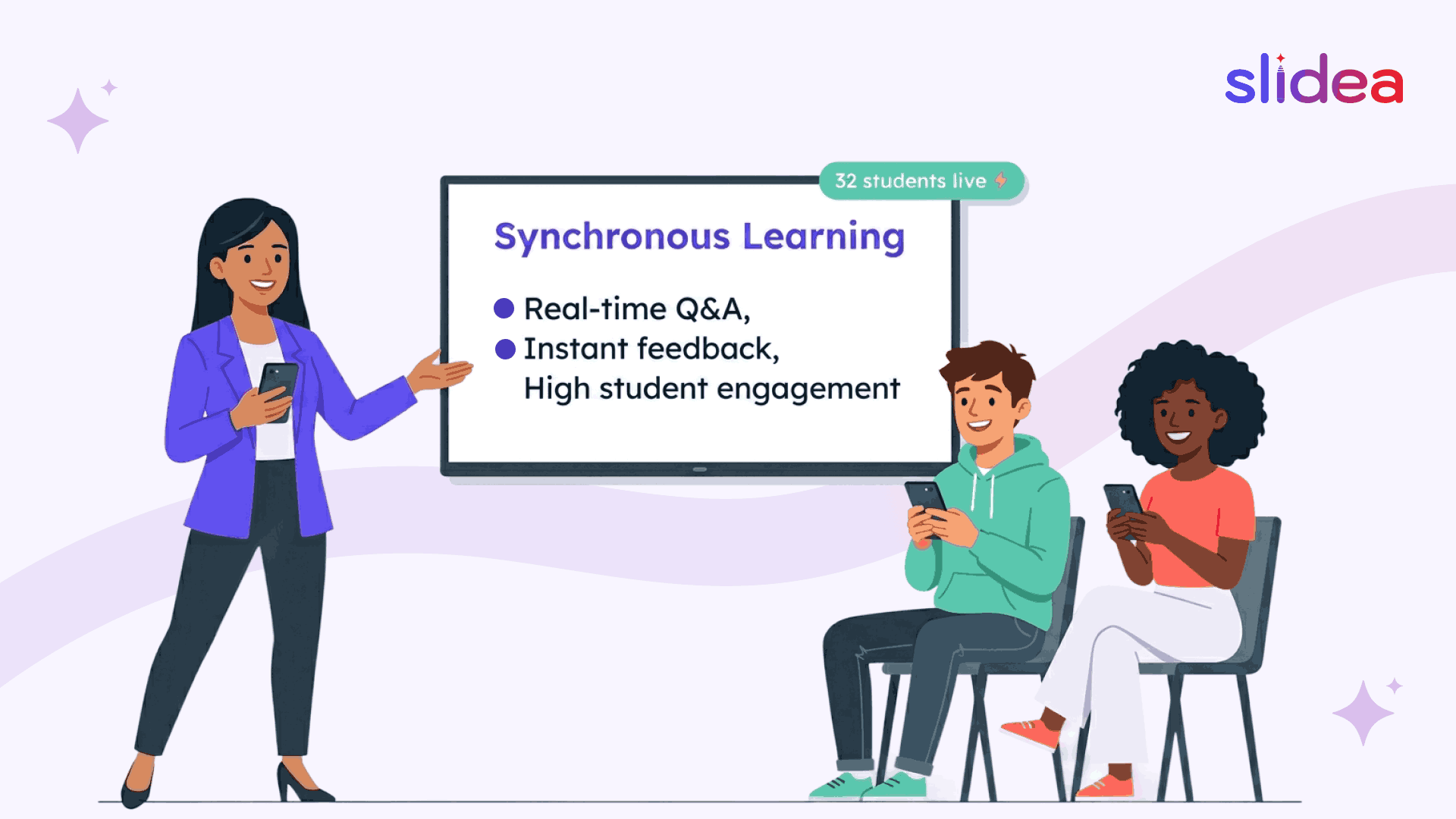
Interactive learning software like Slidea removes the passive, high-anxiety experience of traditional testing. Every student answers at the same time, results appear live, and the format feels more like a game than a test, which reduces anxiety, increases honest participation, and gives teachers more accurate data about what students actually know.





Your email address will not be published. Required fields are marked *