


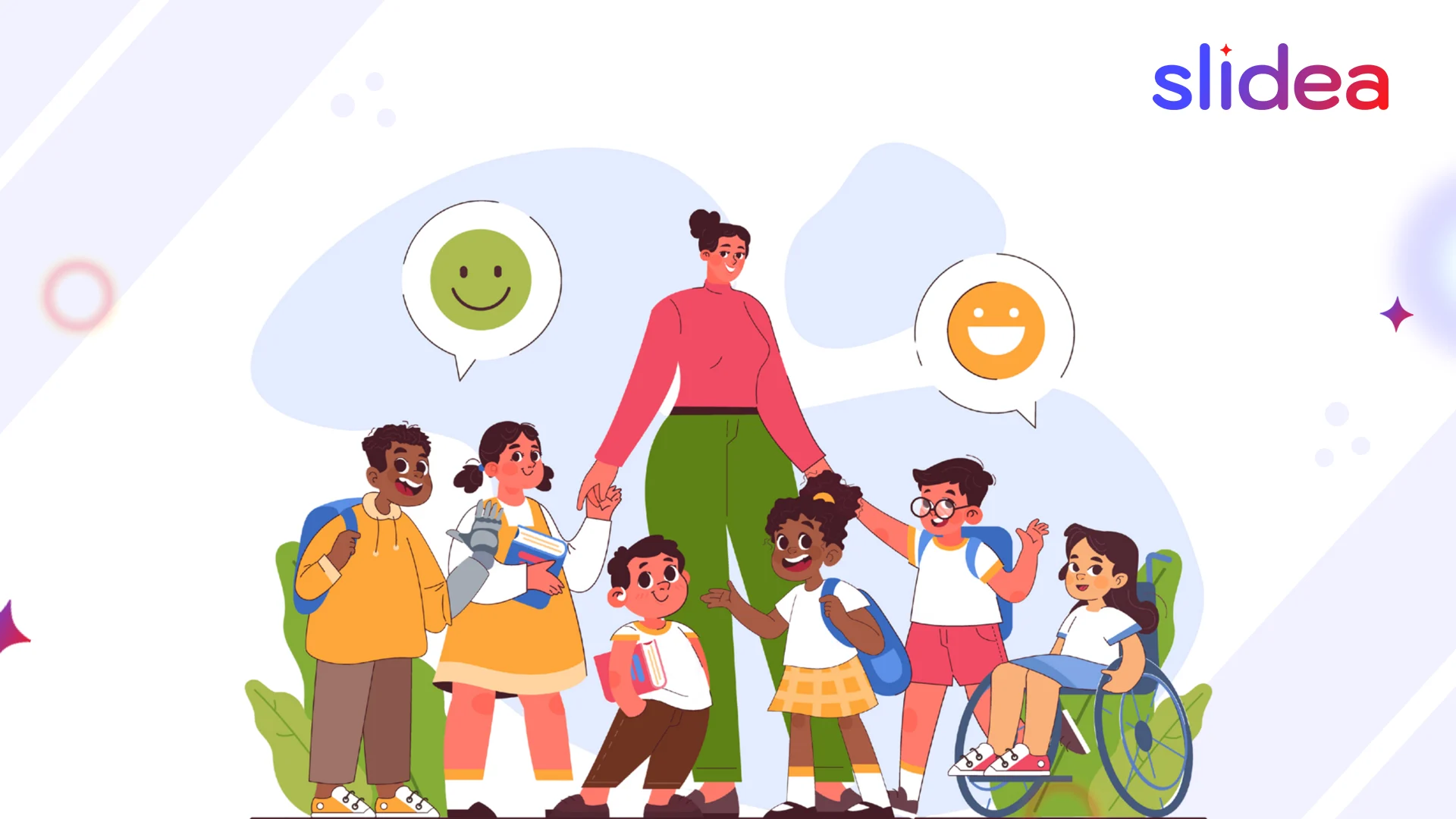
Ever notice how some students light up during lessons while others seem invisible? You’re teaching the same content to the same room, but somehow only half your class feels included.
Here’s what most teaching training programs don’t tell you: traditional teaching accidentally excludes students. Not intentionally, not maliciously, just by design. When you teach to the “average” student, you’re actually teaching to nobody, because average students don’t exist.
Inclusive teaching flips this approach completely. Instead of expecting students to adapt to your teaching style, you adapt your teaching to include every student. Different learning styles, backgrounds, abilities, and needs, all welcomed, all supported, all engaged.
Today’s interactive teaching tools make inclusion easier than ever. Modern classroom technology and student engagement features help you reach every student without working three times as hard. Let’s explore what inclusive teaching really means and how to make it work in your classroom.
What Is Inclusive Teaching?
Inclusive teaching means creating a classroom where every single student feels welcomed, valued, and capable of succeeding, regardless of their background, abilities, or learning style.
It’s not about lowering standards or giving some students advantages. It’s about recognizing that students learn differently and removing barriers that prevent them from showing what they know.
Think of it this way: If you only lecture, you exclude students who learn through doing. If you only use visual slides, you exclude students who process information through listening. If you only give written tests, you exclude students who express knowledge better through conversation or demonstration.
Inclusive teaching provides multiple ways to:
- Access information (how students learn)
- Engage with content (how students participate)
- Demonstrate understanding (how students show they learned)
This isn’t revolutionary education theory. It’s just good teaching that acknowledges a simple truth: your students aren’t identical, so your teaching methods shouldn’t be either.
Why Inclusive Teaching Matters More Than Ever
The modern classroom looks nothing like classrooms from 20 years ago. You’re teaching students with diverse backgrounds, varying English proficiency levels, different abilities, neurodivergent learners, students managing mental health challenges, and kids juggling family responsibilities.
Plus, many classrooms now include both in-person and remote students through hybrid and virtual classrooms. Inclusive teaching ensures physical location doesn’t determine who succeeds.
The benefits are clear:
- Higher engagement across all students
- Better academic outcomes for everyone
- Stronger classroom community
- Reduced behavioral issues
- Increased student confidence
- More joy in teaching
When students feel included, they participate more. When they participate more, they learn better. When they learn better, teaching becomes more rewarding. Everyone wins.
Core Principles of Inclusive Teaching
Inclusive teaching rests on several key principles that guide your approach.
Multiple Means of Representation
Present information in varied formats. Some students grasp concepts through text, others through images, videos, or hands-on activities.
Practical application: When teaching photosynthesis, don’t just lecture. Show a diagram, play a video, use a physical model, and let students draw the process themselves. Multiple representations mean multiple entry points for understanding.
Multiple Means of Engagement
Give students different ways to participate and interact with material.
Practical application: Live polls can be used in the classroom where shy students have an opportunity to express their ideas without raising their voices. Create word clouds and students contribute at the same time. Provide quizzes which allow students to examine the understanding individually prior to discussion with others.
This is not a problem in modern interactive teaching platforms where students can interact through their devices in their own right, relieving pressure and enhancing participation.
Multiple Means of Expression
Let students demonstrate learning in various ways, not just traditional tests.
Practical application: Allow students with the opportunity to demonstrate their comprehension in the form of presentations, videos, drawings, demonstration and verbal explanation, etc. It is not to make them all prove it the same way the aim is to prove them learned.
How Slidea Makes Inclusive Teaching Easier
With the proper technology, inclusive teaching becomes a lot easier. Slidea provides every student with a voice, different learning styles, and teachers with the ability to track the progress of the classes in real-time. This is how it would make your classroom an inclusive interactive room.
1. Every Student Can Participate Quietly
Not every student would like to raise a hand, some of them are afraid, shy or do not want to be wrong. Using the live polls, rating scale and type-answer slides of Slidea, students vote in their private devices.
This will assist the silent learners to contribute without being pressurized and provide teachers with a complete picture of what is being understood in the classroom.
2. Real-Time Quizzes That Catch Misunderstandings Early
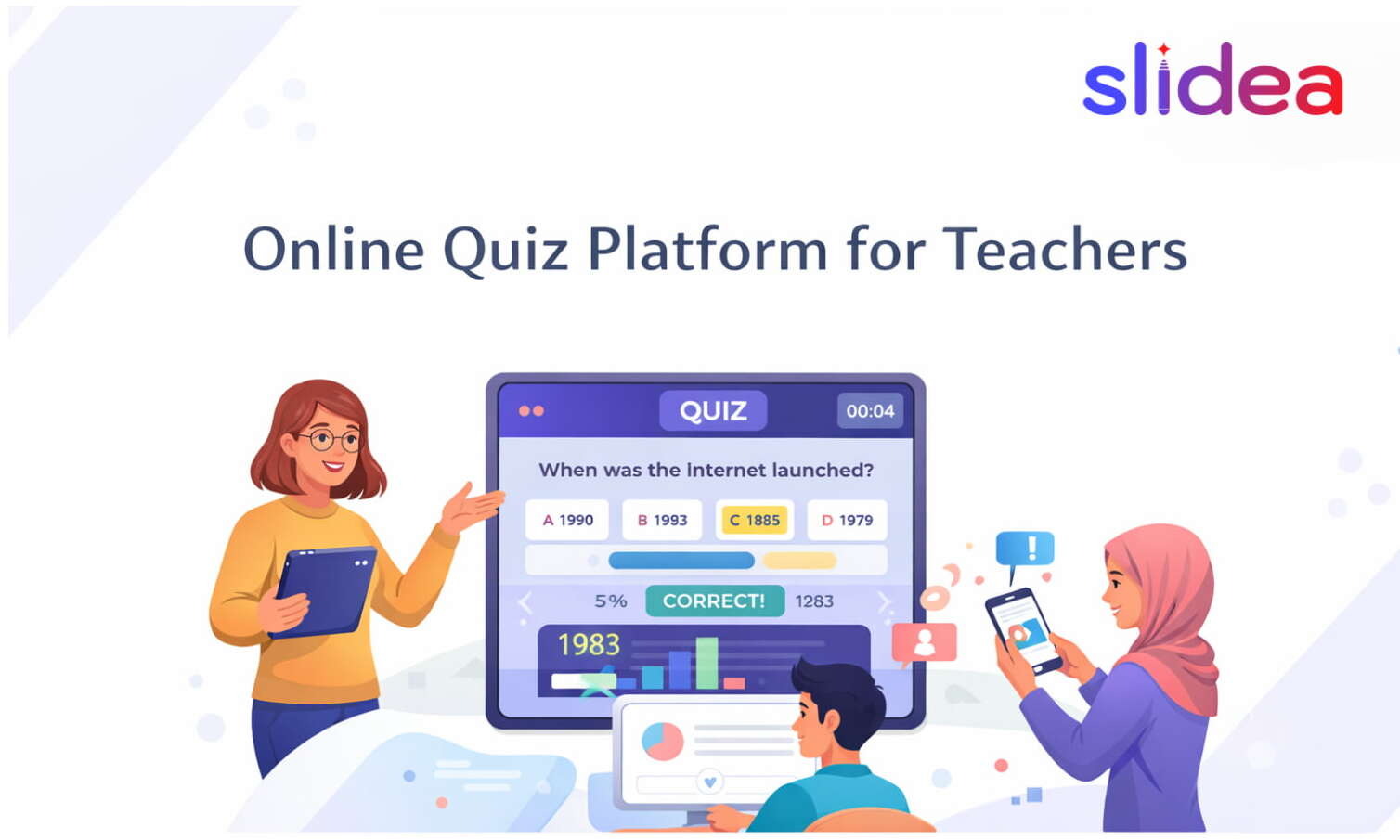
Traditional quizzes take time to grade. The results of the instant quiz offered by Slidea demonstrate what students know immediately.
When several students fail the same question, the teachers are able to re-teach them instantly and not at the time of the test. This allows all learners to be in check particularly those who require additional assistance.
3. Visual Tools That Support Every Learning Style
Students have different ways of learning. Slidea helps visual, verbal, and reflective students with the help of such features as:
- Word clouds that display collective thinking
- Image-based questions for visual clarity
These visuals help students process information in the way that works best for them.
4. Anonymous Responses Encourage Honest Feedback
Students often hesitate to admit confusion. The anonymous mode of Slidea eliminates that fear. Students feel free to ask more questions, to say what they do not understand, and to be more active when they know that their names are not visible. This establishes a more accommodating and safer classroom environment.
5. Equal Participation in Hybrid and Virtual Classrooms
In hybrid settings, in-person students often dominate discussions. This is achieved by Slidea which provides both the remote and the in-person learners with the same interactive resources, live polls, quizzes, live Q& A, and live reactions.
Conclusion
Inclusive teaching isn’t a trend, it’s a thoughtful approach that helps students feel seen and supported. A combination of flexible strategies, effective communication and interactive tools helps teachers to create a classroom where all the students can feel that they are able to learn and participate.
This approach is enhanced by an interactive learning platform, which provides all students with an equal voice, provides different options to engage in learning, and supports both hybrid and virtual learning. Inclusivity will also be one of the most effective tools that teachers could employ to enable students to achieve success in the classroom as the classroom keeps on changing.
FAQs
Q1. What is the main purpose of inclusive teaching?
To establish a classroom environment that allows every student to learn, contribute, and achieve success, with or without background and the learning style.
Q2. Does inclusive teaching require special training?
Not necessarily. Most strategies are simple, flexible, and easy to use with regular teaching routines.
Q3. Can inclusive teaching work in online or hybrid classrooms?
Yes. Interactive tools and digital slides make participation equal for in-person and remote students.
Q4. How does interactive presentation software support inclusive teaching?
It encourages participation through live polls, quizzes, word clouds, and anonymous responses, giving every student a voice.
Q5. Can inclusive teaching improve student confidence?
Absolutely. When students feel supported and safe, they participate more and learn more effectively.




Leave a Comment
Your email address will not be published. Required fields are marked *