


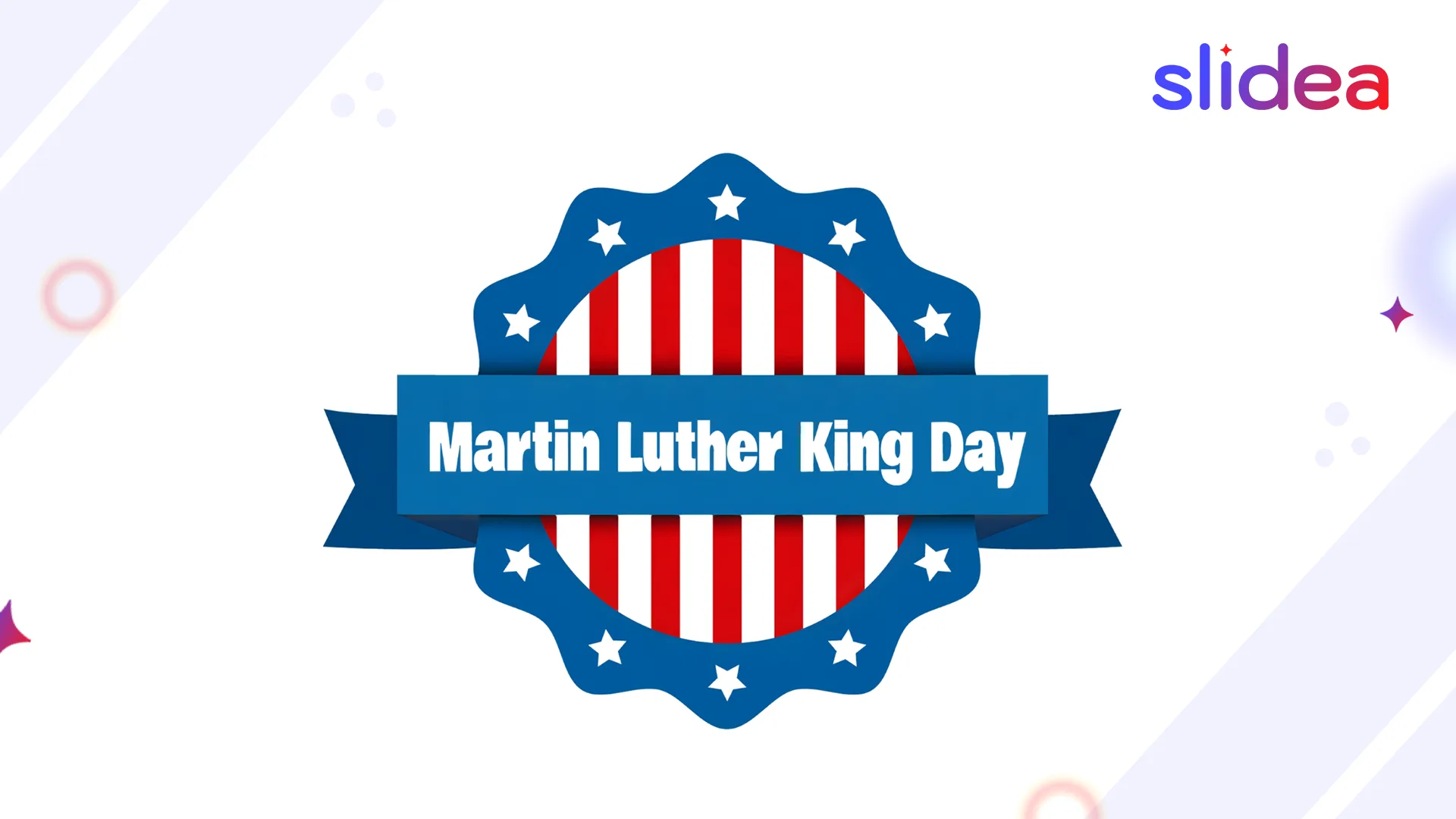
Students who are able to learn about civil rights history in an interactive way demonstrate higher retention when compared to students who learn through textbooks alone. Dr. Martin Luther King Jr.'s legacy deserves more than passive learning, it calls for activities that spark discussion, inspire empathy, and create lasting understanding.
Martin Luther King Jr. Day offers teachers a precious opportunity to bring history alive in ways that resonate with today's students. It does not matter whether you are working with middle school or senior high school students, the idea is the same: you need to make young people grasp Dr. King's message and relate it to their own lives. And when you combine meaningful content with interactive learning tools, you transform these lessons from required curriculum into experiences students genuinely remember.
Who Was Martin Luther King Jr.?
| Topic | Key Information |
| Full Name | Dr. Martin Luther King Jr. |
| Born | January 15, 1929 |
| Birthplace | Atlanta, Georgia, USA |
| Profession | Baptist minister and civil rights activist |
| Known For | Leading the American civil rights movement through nonviolent resistance |
| Core Belief | Peaceful protest and civil disobedience inspired by Mahatma Gandhi |
| Famous Speech | “I Have a Dream” |
| Historic Event | March on Washington (August 28, 1963) |
| Audience Size | Over 250,000 people gathered |
| Major Achievements | Civil Rights Act of 1964, Voting Rights Act of 1965 |
| Nobel Peace Prize | Awarded in 1964 at age 35 (youngest recipient at the time) |
| Assassinated | April 4, 1968 |
| Location | Memphis, Tennessee |
| Legacy | Symbol of justice, equality, and peace |
| MLK Jr. Day | Observed on the third Monday of January in the U.S. |
Why Interactive MLK Day Activities Matter
Traditional lessons help students learn the basics, but interactive activities help them feel the message.
When students discuss, share ideas, vote, and speak up, they understand the lesson more deeply. They don’t just learn that Dr. Martin Luther King Jr. fought for equality, they think about what equality means in today’s world. Instead of only memorizing the “I Have a Dream” speech, they reflect on the dreams they have for their own communities.
This kind of active learning works well for all age groups. Younger students learn best through hands-on and visual activities. Middle school students enjoy group discussions and creative tasks. High school students benefit from debates, analysis, and connecting history to real-life issues. The goal is simple: choose the right activity for each age group and keep students engaged throughout the lesson.
Engaging MLK Day Classroom Activities
The lesson on Martin Luther King Jr. is more effective when the students take an active role and not passive listeners. Seven effective classroom activities are listed below and each of them is accompanied by particular characteristics that turn ordinary lessons into the interactive ones. Be it instant student feedback with live polls, visualizing student thinking with word clouds, testing student understanding with the help of quizzes, or discussing topics using anonymous Q&A, Slidea will offer the features to make the voice of every student heard. We should discuss the way to carry out each activity with the help of interactive classroom tools.
1. Dream Board Creation
Ask students to visualize their dreams of school, community, or world. Provide magazines, art supplies, or digital tools. As they work, play clips from Dr. King's speeches in the background.
Before students begin creating, ask: "What's one dream you have for making the world better?" Students submit responses on their devices, and watch as a beautiful, dynamic word cloud builds on your classroom screen.
2. "I Have a Dream" Speech Analysis
Instead of reading the speech that everyone knows, divide it into parts and give small groups of passages. Ask each group the most prominent message, very strong words or phrases, the way this message is relevant nowadays, and one question they would pose to Dr. King.
After 10–15 minutes of group discussion, bring the class together and review key insights from each section. Conclude with a short quiz based directly on the analyzed passages to reinforce understanding and ensure the quiz clearly connects to the discussion.
3. Timeline of Change Activity
Create a physical or digital timeline spanning from the 1950s to today. Include key civil rights milestones alongside contemporary movements for equality. Students research events, create timeline cards with dates and descriptions, and place them chronologically.
After the research, assess students’ prior knowledge using a quick interactive activity. Ask them to rank important civil rights events by date using lineup slides.
4. Quote Reflection Writing
Display various MLK quotes around the room. Students choose one quote, spend time reflecting, then write about what it means to them and how they can apply it in their lives.
Use the live poll to let students vote on which quote they'd like to reflect on. This small act of choice increases investment in the activity.
5. Peaceful Protest Role-Play
Teach students nonviolent resistance by simulating a peaceful protest. Assign roles: protesters, counter-protesters, observers, journalists. Give them a hypothetical school issue, unfair dress code, limited recess time, or another age-appropriate, low-stakes topic.
After the role-play, conduct a comprehensive debrief:
Poll: "How difficult was it to stay peaceful? Very hard/Somewhat hard/Not hard."
Word cloud: "Describe your role-play experience in one word."
Anonymous Q&A: "What questions do you have about real civil rights protests?"
6. Community Service Planning
This activity helps students turn Dr. Martin Luther King Jr.’s message of service into real-world action. Brainstorm ways students can serve their community, food drives, park cleanups, tutoring younger students, visiting senior centers. Form committees to plan one or more service projects.
After the service projects, ask a brainstorming word cloud: "What problems do you see in our school or community that we could help solve?" As students submit ideas, the word cloud reveals shared concerns.
7. Civil Rights Heroes Research
This activity helps students learn that the civil rights movement was shaped by many leaders, not only Dr. Martin Luther King Jr. Students are divided into small groups and assigned figures such as Rosa Parks, John Lewis, Thurgood Marshall, Fannie Lou Hamer, or Ruby Bridges.
Each group researches their leader’s life, key contributions, challenges faced, and lasting impact on society. Students create a short presentation with simple text, images, and facts, then present it to the class. After all presentations, the teacher runs a live quiz based on the shared information to reinforce learning and boost engagement.
Martin Luther King Jr. Day lessons can naturally lead into broader conversations about civil rights through ideas for celebrating Black History Month in schools.
Final Thoughts
Martin Luther King Jr. Day is a powerful opportunity to shape young minds with values that last a lifetime. When lessons are interactive, students don’t just learn history, they feel it.
Using interactive classroom tools like Slidea helps teachers create meaningful, engaging, and memorable classroom experiences.
FAQs
Q1. Why is Martin Luther King Jr. An important day for students?
It teaches students about equality, kindness, and standing up for what is right in a peaceful way.
Q2. What age group are these classroom activities suitable for?
These activities can be adjusted for elementary, middle, and even high school students.
Q3. Can these activities be used in virtual classrooms?
Yes. All activities work well in virtual meetings and hybrid events using interactive presentation software.
Q4. How long should an MLK Jr. Day lesson be?
A 30–45 minute session is ideal, combining discussion, a quiz, and one creative activity.
Q5. How does Slidea help with audience engagement?
Slidea uses live polls, quizzes, and word clouds to make every student feel involved and heard.



Your email address will not be published. Required fields are marked *