



Understanding how a company is structured is important for keeping teams organized and helping the workflow run smoothly. One of the most effective structures used by growing businesses today is the divisional organizational structure. It is flexible, easy to manage, and works well for companies that handle many products, markets, or regions.
In this guide, you’ll learn what a divisional structure is, how it works, its advantages and disadvantages, real examples, and how an interactive presentation tool can help teams explain and manage this structure more clearly.
What Is a Divisional Organizational Structure?
The divisional organization structure is a company design in which the business is subdivided into smaller and semi-independent business units known as divisions.
Each division has its own:
- Manager or divisional head
- Finance team
- Marketing team
- Operations team
- Goals and targets
It is a type of organization that functions as a smaller company, being a part of a large company. Each of the divisions specializes in a product line, one type of customer, or a region.
Why Companies Use This Structure
Speed and specialization are the key reasons why companies have a divisional structure. When every division is in charge of its own operations, decisions are made quicker, employees are more focused, and customers receive better results.
This structure is highly typical in large organizations, international brands, or businesses that are expanding fast.
Divisional Organizational Structure Types
There are three main types:
1. Product-Based Divisional Structure
The company is characterized by divisions according to various product lines.
Examples:
- A technology company that has different departments of laptops, mobile phones, and home gadgets.
- A company that produces automobiles and has branches of SUVs, sedans, and electric vehicles.
This assists the teams in specializing and innovating at a faster rate.
2. Geographic Divisional Structure
Divisions exist in terms of regions or locations.
Examples:
- North America division
- Europe division
- India division
- Asia-Pacific division
The structure enables firms to know local needs and differences in culture.
3. Market-Based Divisional Structure
The company is divided based on customer groups.
Examples:
- Business customers
- Student customers
- Premium customers
This enables individual divisions to come up with products and services that are specific to different audiences.
Key Features of a Divisional Structure
Here are the main characteristics:
- Semi-independent units
- Fast decision-making
- Clear accountability
- Better specialization
- Flexible workflows
- More leadership opportunities
Because divisions work like small companies, teams understand their responsibilities clearly.
Advantages of Divisional Organizational Structure
✔ 1. Faster Decisions
Divisions do not have to seek the top management approval on everything. Teams are able to make decisions in a hurry and take action.
✔ 2. Higher Accountability
The individual divisions take care of their profits and performance. This assists the managers in being goal-oriented.
✔ 3. Better Innovation
It is also easy to generate ideas that are creative ideas by teams that work on a single product or a single market due to their familiarity with their area.
✔ 4. Easy to Measure Performance
Since the divisions work independently, it is easy to determine the division that has been performing well and that which requires improvement.
✔ 5. Great for Large Companies
This is a structure that suits businesses that expand into new branches or new product lines.
Disadvantages of Divisional Organizational Structure
✘ 1. Duplication of Work
A marketing or HR team can be present in each division, and this will result in duplication of work and increased expenses.
✘ 2. Competition Between Divisions
Sometimes divisions may compete instead of working together.
✘ 3. Requires Strong Leadership
The heads of the divisions should be competent, responsible leaders capable of running whole units.
✘ 4. Can Be Expensive
Managing a large number of divisions may raise the costs of operation.
Real-World Examples
Here are some simple, real examples:
- Coca-Cola uses geographic divisions such as North America, Asia, and Europe.
- Amazon uses product-based divisions like Amazon Prime, AWS, and Marketplace.
- Samsung uses product divisions such as Mobile, Display, and Home Appliances.
These companies use divisional structures to stay organized and grow globally.
Why Divisional Structure Works Well in 2026
In 2026, businesses need:
- Faster operations
- More flexibility
- Better communication
- Clear accountability
- Stronger customer focus
The divisional structure supports all these needs. It also works well with modern tools such as interactive presentation software, dashboards, and collaborative platforms.
How to Use Slidea to Present a Divisional Structure
Step:
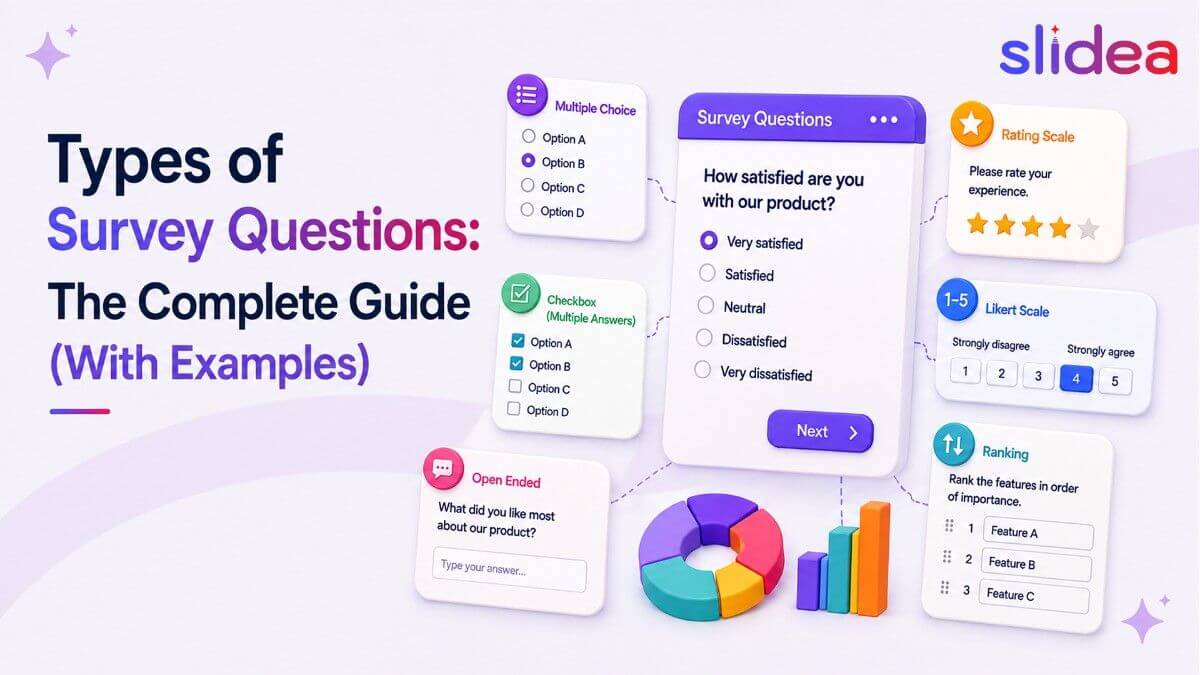
Open Slidea → Choose an interactive slide such as Poll, Multiple Choice, Open-Ended, or Quiz → Add your division details (like product divisions, regional divisions, or market-based divisions) → Present it interactively so teams can respond, vote, and participate in real time.
Conclusion
A divisional organizational structure is one of the best ways for growing companies to manage different products, markets, or regions. It improves decision-making, accountability, and flexibility. With the support of modern tools like Slidea, teams can visualize and discuss these structures more interactively, making training and communication easier in 2026 and beyond.
FAQs
1. What is a divisional organizational structure?
It is a structure where a company is split into divisions based on product, region, or customer type.
2. Who should use a divisional structure?
Large or growing companies with multiple product lines, markets, or regions.
3. What are the main benefits of this structure?
Faster decisions, clearer accountability, and better specialization.
4. Does this structure increase costs?
Yes, because each division may have its own teams and resources.
5. How can Slidea help explain this structure?
Slidea uses polls, multiple-choice, open-ended slides, and quizzes to help teams interact, share input, and understand divisions more easily.





Your email address will not be published. Required fields are marked *